Ahmed Zewail Quotes
Some consider the removal of Dr. Mohammed Morsi a coup by the army against an elected president. Others treat it as the second revolution, or the continuation of the January 25, 2011, revolution.
Zewail, Ahmed. Reflections on World Affairs: Peace and Politics. Imperial College Press, 2015.


In the Vietnam War, America and her allies were defending the South Vietnamese from the Communist and Nationalist incursions of the North Vietnamese. However, the South Vietnamese government was itself a very fragile democracy which provided rights little better than the Ho Chi Min lead government of the North. Further, the South Vietnamese rulers and governments while claiming to be democracies, were little more than in name only and were very corrupt. As with many unstable and weak governments, South Vietnam had experienced a succession of coups, with some of his advisors favoring the coups and a few actualy supporting them. Johnson was continually frustrated by this and this expression was his own inimitable style.

He had been jailed by the corrupt dictator Diaz but escaped to the United States, where with this Declaration, the Mexican Revolution was triggered.


Morales, a full blooded Indian in a country where whites of European origin had always dominated the politics was warned against running in an election that was likely to be rigged against him. Even if he won the plurality of the vote, Bolivian law provided for the Parliament with few of his sympathizers to elect the president. However, Morales made this famous statement in a country where the last two Presidents had been brought down by people rioting in the streets. Morales surprised everyone be not only winning the plurality but winning by a large majority.

1st Earl of Beaconsfield


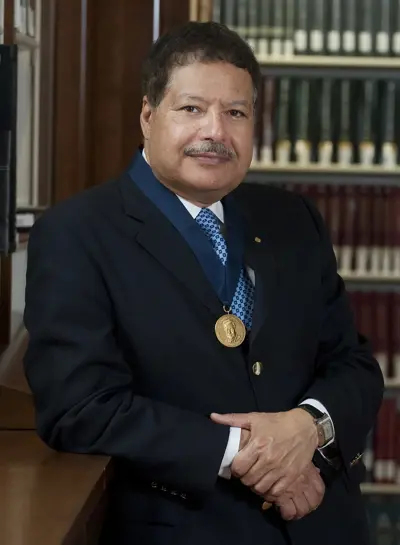
Ahmed Hassan Zewail was an Egyptian-American chemist, known as the "father of femtochemistry". He was awarded the 1999 Nobel Prize in Chemistry for his work on femtochemistry and became the first Egyptian to win a Nobel Prize in a scientific field. He was the Linus Pauling Chair Professor of Chemistry, Professor of Physics, and the director of the Physical Biology Center for Ultrafast Science and Technology at the California Institute of Technology.
