Judah P. Benjamin Quotes
I consulted the President [Jefferson Davis] whether it was best for the country that I should submit to unmerited censure or reveal to a Congressional Committee our poverty and my utter inability to supply the requisitions of General Wise, and thus run the risk that the fact should become known to some of the spies of the enemy, of whose activity we were well-assured. It was thought best for the public service that I should suffer the blame in silence and a report of censure on me was accordingly made by the Committee of Congress.
After the Confederate defeat at Roanoake Island, Norfolk, VA, in January, 1862:
Judah P. Benjamin, 1811-1884, U. S. Senator (Whig & Democrat, LA), Confederate Attorney General, Secretary of War & Secretary of State, Quoted in Commager, The Blue and the Gray
Sourced by: Eigen's Political and Historical Quotations

At the time there was no Secrecy & Classification System nor any laws enforcing secrecy or confidentiality. However there was no freedom of information laws of expectations even on the part of journalists. This was the first Freedom of Information policy of the American government. Some politicians were more open than others but there was no national, governmental before this. There were however leakers and whistleblowers though the terms were not in use. Note that Roosevelt herein created the first whistle blower protection—himself.

This is a great example of Presidential stonewalling of Congress. The legislative branch is often exercising its oversight role and demanding executive department documents which for various reasons the President does not want the Congress to see. In this case, almost all attorneys would have said that the Congress was entitled to see the documents. This set a precedent of de facto Executive Privilege for war time. However, Congress very often has used their power of demanding documents for political and ideological reasons and not for the better functioning of the government. In the Eisenhower administration the concept of Executive Privilege was formalized to protect President Eisenhower and officials in the Executive Branch from the abuses and excesses of Joseph P. McCarthy who was a fanatic, ideologue and an alcoholic at the same time. See {595900}.


This quotation provides knowledge of two areas of Fugitive Slave contributions to the Union War effort. Most people erroneously think that the Fugitive Slaves were only put to work in unskilled labor battalions. However, many were skilled at construction. Most interesting however is the role Blacks played as spies for the Union Army—a fact of with which many historians are ignorant.


The secretary was urged to resign because President Truman had decided against him on a major policy issue. The only soldier ever so honored

When Roosevelt was elected Governor of NY State, the State Party Boss Platt saw patronage and contracts was the most important services the Governor should render to the Party. TR had a different view as expressed here.

“Public charities” were government services that were like those provided by private charities: relief, food, housing etc. ie “welfare”

The issue was still not decided by the beginning of the 21st Century except that a certain amount of public disclosure was required if the company raised funds by selling stock to the public, but there were some giant corporations that were private and exercised huge power and influence and yet whose operations were secret.

There have been dozens of serious nuclear accidents almost all of which were withheld from the public and even many of the civilian scientists who were trying to make the bombs error proof, but who did not know the details of the kinds of human errors that were being committed. The motivations for the secrecy were multiple. There was the usual one of saving the military from embarrassment which is typical throughout the government where they have the right to classify information. But another reason was the military leaders did not want the civilians to regain control. See {637984}. Perhaps most important, they did not want to provide ammunition for the anti-nuclear movement to have the incidents with which they could scare the public and erode public support for a large nuclear weapons program.

Indeed his valet was a spy who worked for the British. However, Franklin assumed that European courts and capitals were filled with spies, and instead of trying constantly to ferret them out, he made sure that he never allowed anyone to know what he wanted to keep secret. While Jefferson essentially adopted the same viewpoint, John Adams, much more uptight and rigid, was very distressed with Franklin over their differences in counter-espionage strategy. In reality, no secrets ever leaked back to England, but their spies sent some of the most absurd reports of the “evil” Dr. Franklin. He was designing a huge set of lenses that could be pointed at the British fleet in the Channel, magnify the rays of the sun and set the ships ablaze. Another had Franklin designing a chain that would be stretched from France to England and an electric current transmitted thereupon causing the English island to blow up. These reports made Franklin and the French the first who were feared for their plans to design and deploy weapons of mass destruction.


The improved access comes from the rapid technological and economic development of open source information available to the public. Governments will also benefit although governments will not be able to maintain as much secrecy,

Casey frequently withheld information from Congress that he was legally required to report, did things without Congressional authorization and often lied in his testimony and reports to Congress.
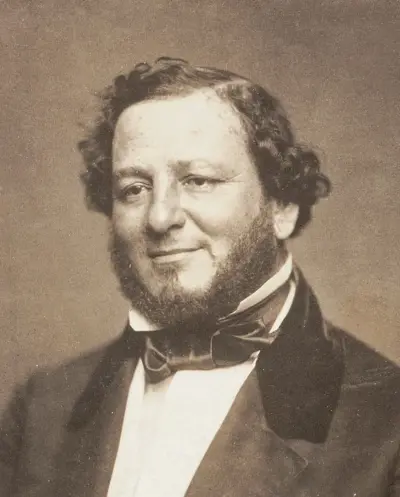
Judah Philip Benjamin, QC was a lawyer and politician who was a United States Senator from Louisiana, a Cabinet officer of the Confederate States and, after his escape to the United Kingdom at the end of the American Civil War, an English barrister. Benjamin was the first Jew to hold a Cabinet position in North America and the first to be elected to the United States Senate who had not renounced his faith.
