Richard Ojeda Quotes
I come from the coal fields.
Ojeda, Richard. "Richard Ojeda for President." YouTube, uploaded by Richard Ojeda, 11 Nov. 2018.


See Tom Steel {40547} for a summary of mine serfdom.

The coal miners’ strike had been going for 5 months. The major issue was the right to union recognition. The mine owners refused to do that and decided to take the strike. President Theodore Roosevelt mediated a settlement where the miners won more money but no union recognition. The great appeal and significance of this speech is that it stressed the young children who started working in the mines at ages 8 or 9 by working on the “breakers” where they broke up large chunks of coal into smaller chunks. The children never saw daylight and never had a chance for education much less a childhood. At the time, and well into the 20th century the Republican Party was adamantly opposed to any legislation regulating child labor and when two decades later public opinion finally forced Congress to pass Child Labor legislation, the Supreme Court declared it unconstitutional and it took a Constitutional Amendment. See {32240}, {642469}, and {36885}.


This quotation became a slogan of the miners. Lewis did not originate it. It has been referred to as early as 1902 in the bitter coal strike of that year. Generally coal mining strikes have involved more force and military than most labor disputes. While labor representatives maintain that force does not help, mine owners have believed that force is absolutely necessary. See Richard B. Mellon’s testimony to Congress in 1937--{563576}.

What is interesting about this quotation is that there was great argument at the time that business—in this case coal mining—had an obligation to provide safe working conditions for the miners, require reasonable work hours, and pay a fair wage. Baer and most other industrialists of the time were of the opinion that the only obligation that it owed was to its shareholders. Business had not moral or ethical obligations to workers. Theodore Roosevelt and the reformers of the day challenged that notion, and it seemed to have been resolved in the New Deal of FDR. However, in the last quarter of the 20th century, there was a conservative economic and political movement that went back to this position of Baer’s. While many corporations adapted that view in the 21st century, many did not, and some like Starbucks and Google urged an even greater ethical obligation to workers than ever.

Much of the working class at that time had still not recovered from the Great Depression slowdown of the economy and had been “hard hit”.


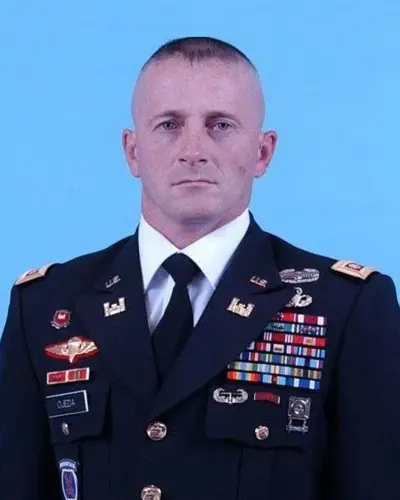
Richard Neece Ojeda II is an American politician and retired United States Army major who served in the West Virginia Senate representing the 7th district from 2016 until 2019. A member of the Democratic Party, he ran a brief campaign for President of the United States in the 2020 election.
