John L. Lewis Quotes
You can’t mine coal with bayonets!
This quotation became a slogan of the miners. Lewis did not originate it. It has been referred to as early as 1902 in the bitter coal strike of that year. Generally coal mining strikes have involved more force and military than most labor disputes. While labor representatives maintain that force does not help, mine owners have believed that force is absolutely necessary. See Richard B. Mellon’s testimony to Congress in 1937--{563576}.
John L. Lewis, 1882-1947, President, United Mine Workers of America, Public Statement when the President was contemplating having Federal Troops take over the coal mines during a major coal strike, 1943
Sourced by: Eigen's Political and Historical Quotations


At the time this article was written coal was being phased out in most of the country but not as the result of any political actions. The new technologies of producing shale oil and fracking had driven down the price of natural gas and oil, making coal the most expensive fuel alternative so the market place was finally doing what the politicians would not do. Ironically, the conservative politicians from coal producing states like West Virginia and Kentucky, who would normally say that government should always defer to the marketplace, then called for government action to protect the coal industry from the marketplace.

This quotation on the surface appears to be a clear summary of the scientifically measured negative aspects to coal. However, it was an extremely bitter political quotation. The reason was that West Virginia and the other parts of Appalachia depend on coal for employment—jobs for the residents in a poverty-stricken area where there are few other potential sources for employment. Coal is also a key economic component of the economy in Wyoming. These states regard the reduction of coal as an energy source as one of the most serious political threats to their states and the treat it accordingly. West Virginia has Democratic Senators and congressmen from Appalachia. Wyoming has Republicans. Both exert enormous pressure on their Congressional Party leadership and the White House. With the country and Congress split at the time, Republicans had control of the House, and Democrats, the Senate and the Presidency—by very narrow margins so the leaderships cannot offend anyone in Congress. The result is that there was almost total silence about the huge coal pollution problem, and even in the second decade of the 21st century, where shale natural Gas was extractable in sufficient quantities to totally replace Coal as a fuel source, few in Congress or the administration ever even spoke of adopting a national policy to this effect, much less passed any legislation. During this period many Americans sickened and died as a result of coal every year with no end in sight.


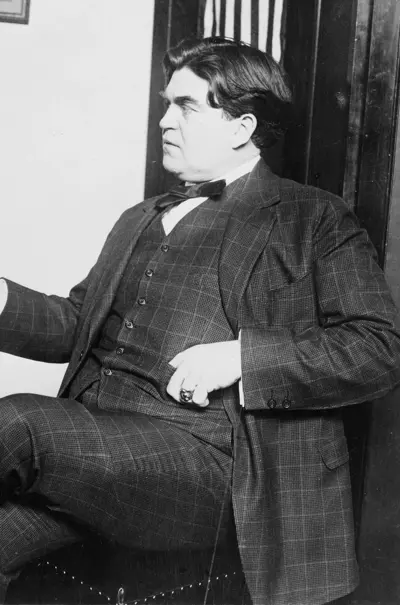
- Born: February 12, 1880
- Died: June 11, 1969
- Nationality: American
- Profession: Miner, Labor Leader
John Llewellyn Lewis was an American leader of organized labor who served as president of the United Mine Workers of America (UMW) from 1920 to 1960. A major player in the history of coal mining, he was the driving force behind the founding of the Congress of Industrial Organizations (CIO), which established the United Steel Workers of America and helped organize millions of other industrial workers in the 1930s, during the Great Depression. After resigning as head of the CIO in 1941, Lewis took the United Mine Workers out of the CIO in 1942 and in 1944 took the union into the American Federation of Labor (AFL).
