Malcolm X Quotes
I believe that there will be ultimately be a clash between the oppressed and those who do the oppressing. I believe that there will be a clash between those who want freedom, justice and equality for everyone and those who want to continue the system of exploitation. I believe that there will be that kind of clash, but I don't think it will be based on the color of the skin.
X, Malcolm. Interview by Pierre Berton. The Pierre Berton Show, 19 Jan. 1965.

The issue of slavery which had been suppressed in Congress for the first decades of the nation broke out when Missouri statehood was considered. By previous agreement, slavery was not even discussed in Congress but the time period elapsed. Tallmadge not only proposed that no more slaves could come into Missouri {613176} but most shocking to the Southerners was that every person born in the new state would be free at the age of 25. In a generation, there would be no more slavery in Missouri and there would be no economic compensation for slave owners at all. The House of Representatives accepted the amendment, but it failed in the Senate. At that time, Senators were not elected by voters but were appointed by the state legislators and the Southern slave states had a disproportionate share of the senate from a population point of view. But what this quotation shows clearly that a majority of the country in 1819 were opposed to slavery and were willing to end it without compensation.

Before the civil rights act was passed, most labor unions will racist and discriminated against black workers. The United Auto Workers union was an exception and Reuther was a strong advocate of desegregation and equal rights.


He was assassinated for his anti-apartheid views and speeches. Most clerics of the Dutch Reformed Church had traditionally supported the Afrikaner colonial view of Black inferiority and apartheid. Heyns was an exception and he was named by Nelson Mandela as a “martyr of his country.”


Many fighters for civil rights split from the majority of the Black leadership over racial preferences for affirmative action.


Supervisors of black soldiers reminded them that


Vladimir Lenin. After the Russian Revolution the Soviet State rejected the use of a copyright and patent system with the notion that all intellectual property belonged to the state. According to some political economic theorists, this would portend great difficulty in obtaining innovative and creative output in the arts, industry, and sciences. However, in the next 50 years, Russia went from a backward nation to one of the most scientifically sophisticated in the world and their creative arts output, quality and quantity was second to none. They did not fare as well in consumer technology although their military technology was very powerful and all the more amazing considering where they were in 1918 when the Russians adopted these policies. The issue of whether artists, scientists, and inventors need exclusive control of their output in order to be motivated to create has been in dispute for years.


Full quote: Nature smiles at the union of freedom and equality in our utopias. For freedom and equality are sworn and everlasting enemies, and when one prevails the other dies. Leave men free, and their natural inequalities will multiply almost geometrically, as in England and America in the nineteenth century under laissez-faire. To check the growth of inequality, liberty must be sacrificed, as in Russia after 1917. Even when repressed, inequality grows; only the man who is below the average in economic ability desires equality; those who are conscious of superior ability desire freedom; and in the end superior ability has its way. Utopias of equality are biologically doomed, and the best that the amiable philosopher can hope for is an approximate equality of legal justice and educational opportunity.


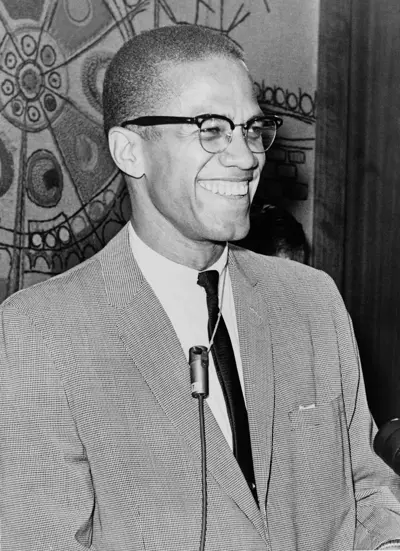
Malcolm X was an African-American Muslim minister and human rights activist who was a popular figure during the civil rights movement. He is best known for his time spent as a vocal spokesman for the Nation of Islam.
