Morris Abram Quotes
In the 1960’s I was opposed to a system of preferences known as white supremacy. I am still against preferences.
Many fighters for civil rights split from the majority of the Black leadership over racial preferences for affirmative action.
Morris Abram, 1918-2000, Vice Chairman, U. S. Commission on Human Rights, President, Brandeis University, US Permanent Representative to the United Nations, Chairman, United Negro College Fund, President, Field Foundation, President, American Jewish Committee, PBS Firing Line, August 11, 1996
Sourced by: Eigen's Political and Historical Quotations


Before the civil rights act was passed, most labor unions will racist and discriminated against black workers. The United Auto Workers union was an exception and Reuther was a strong advocate of desegregation and equal rights.

He would not allow himself to be buried in a cemetery that would not allow Blacks. He was laid to rest in Shreiner's Cemetery, one of the very few racially integrated cemeteries at the time.


Humphrey was the Mayor of Minneapolis then.


This was actually a very courageous statement for an American politician running for national office. As a result of the pressure of this statement President Franklin Roosevelt allowed Black enlistment in the Army Air Forces.

This was the first major civil rights speech. He had previously in his political career tread carefully in the civil rights arena. The Southerners had disproportionate control over the Congressional committee chairmanships and they could hold up his entire legislative agenda. JFK’s father was a right wing fascist who supported Hitler earlier and always advised against pushing civil rights.

See {618215} for a seemingly contradictory quotation by White.

Douglas was appealing to the racist crowd in Galesburg by showing that Lincoln actually believed in Racial Equality. This technique was used be racist politicians—since then and in a few places of the South even into the 21st century.


At the time, the Southern segregationists were all Democrats and they blocked any Democratic attempt to pass any Civil Rights legislation. When he could not get a Civil Rights commitment from his own party, Powell turned to the Republicans and the President wrote this letter. In return, in November, Powell endorsed and supported Eisenhower instead of Stevenson, his own party’s nominee. Eisenhower could not get any legislation on Civil Rights as the Southern Democrats would always block it. When President Lyndon Johnson finally forced the 1963 Civil Rights Act through the Congress, the racist Southern Democrats cut a deal with Goldwater and the conservative Republicans, and switched parties. Since then the Civil Rights stance of the two parties reversed. The Democrats were thereafter pro Civil Rights and the Republicans, the party of Lincoln and Reconstruction, thereafter reversed their Civil Rights position and opposed progress in this area.

It was not until this publication that people who suggested that discrimination and lack of education and opportunity might have something to do with the problem Blacks faced in society were regarded by many Americans as anything but left wing intellectuals.

There are few people today who could believe that a United States senator would castigate the head of a Federal Agency for spreading “racial equality propaganda.” But at the time—1943—the actions of Education Commissioner John W. Studebaker and his Assistant took remarkable courage.


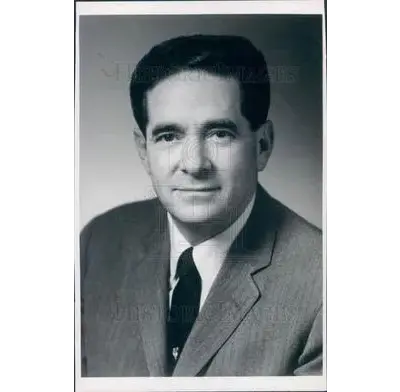
Morris Berthold Abram was an American lawyer, civil rights activist, and for two years president of Brandeis University. In 1953 he successfully sought the Democratic nomination for Congress from the Fifth District in Georgia, urging the desegregation of schools but lost the election in 1954. He may be best remembered as a civil rights attorney who successfully waged a fourteen year struggle from 1949–63 to end a Georgia electoral rule that gave disproportionate weight in primary elections to vote counts in white rural areas at the expense of those cast by urban blacks. When the rule was struck down by the Supreme Court in 1963, he briefed Attorney General Robert Kennedy who argued the case.
