Harold L. Ickes Quotes
I am thoroughly convinced that he is a lawless individual bent on building up a reputation for himself as a great builder, even at the expense of the President and the country. I think he is the greatest threat today to the president's reelection.
Harry Hopkins, Franklin Roosevelt's special assistant
Harold L. Ickes, 1874-1952, U.S. Secretary of the Interior (Republican), Diary, 1943
Sourced by: Eigen's Political and Historical Quotations

She was the first Black woman to be elected to Congress and was the first Black woman to actively campaign for the Presidency

In an irony, the first President limited by a term limit amendment pushed by Republicans remembering FDR turned out to be fellow Republican Dwight D. Eisenhower.

Referring to the defendant, U.S. Congressman Mario Biaggi, in a corruption trial:

The justice so hated the President, that he not only made intemperate insulting remarks in private as this one but he even made intemperate insults in Supreme Court proceedings. See {585241}. McReynolds was an extreme racist and detested every thing that FDR and the New Deal stood for. Although an elderly man when FDR came into office, he lived long enough so that Roosevelt was never able to appoint his replacement. McReynolds was one of the reasons that FDR tried to pack the Supreme Court.
Roosevelt’s first gubernatorial term was shaken by the Stock Market Crash and the Failure of the Banks 1929 and the passivity of the Herbert Hoover administration in Washington in coping with the economy and the Great Depression. Reform of Tammany Hall and other State problems took a back seat to trying to create jobs and stabilize the state economy. The Republican candidate Tuttle could not argue against FDR’s economic policies as he would then have to defend President Hoover who was becoming exceedingly unpopular. So he went after the corruption of the Tammany Hall Machine and Roosevelt’s relative passivity. The voters were ok with FDR’s priorities.

This speech was given in the early days of WWII when it was far from clear that we would win.
When Britain and America invaded Iraq and toppled the Saddam government, massive looting broke out. Britain and America were criticized by some for not protecting museums, government buildings and other targets of the looters, blaming the coalition for not maintaining law and order. Kilroy-Silk and others disagreed and blamed the looters primarily.

Attributed. The earliest close match located by QI appeared in a column by Dick Nolan in “The San Francisco Examiner” of California in 1966. The comedian Robin Williams, 1951-2014, was also very successful with this line a century later.


This quotation illustrates an interesting phenomenon in American Presidential Politics. There have been Democratic Presidents (FDR and Obama are the most glaring examples) for whom there was vituperative hatred and derision from the conservative Republicans who would frequently refer to them as Socialists and would believe that they were trying to lead the country on the path to socialism. The Presidents always stated that they were opposed to socialism, but to little avail with their conservative haters. But the socialists of the times and even the left wing of the Democratic Party not only did not see them as socialists, but were not very supportive or complementary of their skills and capabilities. Roosevelt reveled in the situation and “welcomed: their hate. Obama was more of a public centrist who tried to avoid the president getting involved in the extreme partisanship of the day.


The coup which deposed and then murdered Patrice Lumumba had the help of the American CIA and French Army. Lumumba was a Marxist and Mobutu appeared to be an anti-Communist. The corruption under Lumumba was typical of most African counties but Lumumba himself was an ideologue and but not personally dishonest. Under Mobuto, the Congo—renamed Zaire—became the most corrupt nation on earth, and Mobuto, one of the richest men in the world. Everything he complained of to justify is coup, he himself was guilty of when he consolidated power—moreso than any other 20th century world leader.


Kerry had just finished a formal presentation, and thought that the microphones he was wearing had all been removed. Some opponents accuse him of knowing that he was overheard by live mikes.

The members of the Irish Parliament at that time were an almost permanent group. Their constituents, were uneducated, ignorant, and often dependent on the member and in fear of retribution if he were not elected. Like any legislative body of members or almost certain reelection, many of the members were corrupt and unaccountable.

President’s did not have then the kinds of staff resources that they would get later. Roosevelt had friends and professional relationships with journalists, military men, business men and others whom he used for staff work and advice. Franklin Delano Roosevelt also used this technique extensively.

Ideologues and men of strong principles are not open to compromise and often are not persuasive of others. Compromise and persuasion is necessary for success in politics.

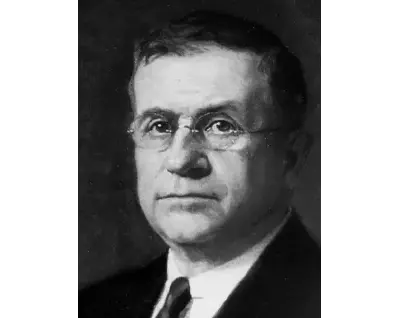
Harold LeClair Ickes was an American administrator and politician. He served as United States Secretary of the Interior for 13 years, from 1933 to 1946, the longest tenure of anyone to hold the office, and the second longest-serving Cabinet member in U.S. history after James Wilson. Ickes and Labor Secretary Frances Perkins were the only original members of the Roosevelt cabinet who remained in office for his entire presidency.
