Edmund Burke Quotes
The very name of a politician, a statesman, is sure to cause terror and hatred; it has always connected with it the ideas of treachery, cruelty, fraud, and tyranny…
Edmund Burke, 1729-1797, Irish Orator & Member of the British Parliament, Vindication of National Society
Sourced by: Eigen's Political and Historical Quotations

He like others were very critical of Democracy and also of tyranny, but they had no positive solution as to what was acceptable.

He was expelled from Parliament for such.


Iturbide, known also as Agustin I, was the first Emperor of Mexico who was executed by a firing squad.


Describing the career of Alexander Hamilton:


The George W. Bush administration had a reelection coming up and this administration had raised opacity to a new high in American History.


The Priest was the right wing demagogic radio host of his day. Virulently anti-Semitic and anti-Black, he was threatened with excommunication by the Catholic Church, which finally ordered him to cease us weekly radio show and stop the political hate.

Characterizing Martin Luther King Jr.:


While that is certainly true and has been borne out by history, the same thing can be said of democratic rulers and even many democratic politicians of lower rank. Yes men abound and not politicians not only want them but arguably need them in order to maintain the assurance and positivity that most voters associate with good leadership.

After Harry Truman stated that certain civil rights protests were communist inspired in 1960, his former Secretary of State requested that he restrain himself on this subject. The allegations of a communist conspiracy had arisen from the FBI’s chief, J. Edgar Hoover.


Sir Walter was imprisoned in the Tower of London for 13 years, during which time he turned to historical pursuits.


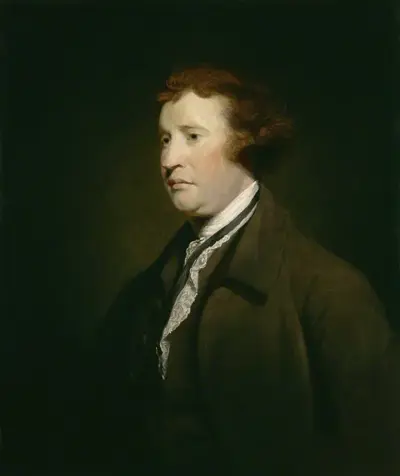
Edmund Burke was an Irish statesman, economist, and philosopher. Born in Dublin, Burke served as a member of parliament (MP) between 1766 and 1794 in the House of Commons of Great Britain with the Whig Party after moving to London in 1750.
