Geert Wilders Quotes
I am not saying that I want to ban Islam. I want less Islam in Europe because it doesn't allow any room for debate.
Wilders, Geert. "I Don't Hate Muslims, I Hate Islam." Der Spiegel, Spiegel-Verlag, 27 Feb. 2008.


Many Arab orthodox Muslims would be terribly angry and insulted if Islam or key elements of it were insulted. To them this was obscene. Culturally, sarcastic comedic attacks and insults in general are not common in Arab culture. Making fun of Islam or the Prophet was unheard of. Under Sharia (Islamic Law) this is heresy and must be stopped, with the heretic put to death. In the early 21st century, the Internet and other modern communications exposed Muslims to the West in a level of detail that had been unknown before. Satirical TV shows like South Park and political and social cartooning in Western countries sometimes made fun of Islam and Muhammad, and militant Muslims would exploit these situations to produce huge protests including violent attacks on Westerners or interests of the countries where these “offences” took place. With little or no understanding of freedom of speech, many Arabs saw governments that would “allow” such satire as attacking and wanting to destroy Islam.

In 2005 Rose published a number of cartoons some of which depicted the Muslim Prophet, Muhammad which offended many fundamentalist Muslims who had a tradition who had a tradition of never depicting the visage of the Prophet. A delegation of clerics demanded an apology from Rose and the country of Denmark, claiming that they and Islam, like other religions, were entitled to respect.

Islam is a religion, like many Christian sects, where conversion of non-believers is a religious duty. When many of the European day-to-day customs, conflict with Islamic custom or prescription, decadence and the desire to change it becomes a very predictable result.
He wrote this in the midst of the Salmon Rushdie affair where some Muslim clerics had issued a fatwa calling for the murder of the author because in this view his writings offended Islam.

She was originally Egyptian but because of her criticism, her citizenship was actually revoked.

This quotation which appears absurd on the surface given Iran’s terrible record with religious minorities provides insight to Islamic orthodox thought. For the orthodox Muslim, Sharia—Koranic Law—is the basis of the society. God defines the rights of people and their obligations. Whatever rights are provided by Sharia, Khomeini and some others wished to provide them equally to religious minorities also. However, those rights do not include the right to criticize the Islamic law or the leaders who implement it. That would be heresy if done by a Muslim, a Christian, or a Jew. A Christian church may not erect a public cross or ring bells on Sunday. That is prohibited by the Koran and is imposed on all. Bahai religious adherents are tracked down in the Islamic Republic and are often executed. ‘What about their rights?’ they ask. The answer is that the Bahai were Muslims who have become “backsliders” and heretics, and under Sharia, they must be executed for heresy; they are deemed to be heretical Muslims and not members of a minority religion.

At the time Turkey was the only Muslim majority country where there was coexistence with secularism but with Christians and Jews as well. Ataturk, the great Turkish leader, turned Turkey around, modernized it, Westernized it, and made it a secular state with freedom of Religion, much like the United States. However, Erdogan’s party was constantly trying to make the state more Islamic as his electoral base were the poor, religious, Muslims.


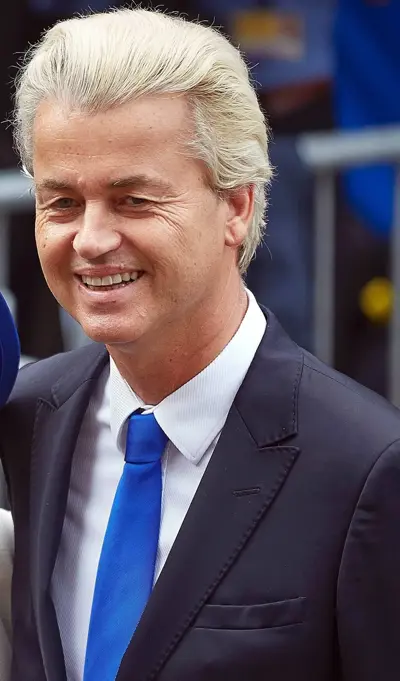
Geert Wilders is a Dutch businessman and politician. He has been Leader of the Party for Freedom (Partij voor de Vrijheid – PVV) since he founded it in 2006. Wilders is the parliamentary leader of his party in the House of Representatives (Tweede Kamer). In the 2010 formation of the Rutte cabinet, a minority cabinet of VVD and CDA, he actively participated in the negotiations, resulting in a "tolerance agreement" (gedoogakkoord) between the PVV and these parties, but withdrew his support in April 2012, citing disagreements with the cabinet on proposed budget cuts. Wilders is best known for his criticism of Islam and the EU; his views have made him a controversial figure in the Netherlands and abroad, and since 2004 he has been protected at all times by armed bodyguards.
