George W. Bush Quotes
I am learning more about Panama from CNN than from the CIA
CIA Director Webster had cleaned up the agency, but morale was terrible and there were few human agents left in key spots around the globe. However, since CNN and the other news organizations of the world have been equipped with modern digital technology it is quite common that they get information before the CIA does and often obtain information that the CIA never did get. In this instance, Bush turned to the Defense Department instead of the CIA and ordered a full scale invasion to arrest President Noriega who was running illicit drugs into the United States and felt that because he had once been a CIA informant, he would be immune.
George W. Bush, 41st President of the United States (Republican, TX), Complaint to his staff, 1989
Sourced by: Eigen's Political and Historical Quotations

It is noteworthy that a U. S. President had such a harsh evaluation of our major intelligence agency. Even more important in this case is that this President justified his 2003 decision to invade Iraq and start the war on the intelligence he claimed was provided to him by the CIA that Iraq had weapons of mass destruction. This quotation and the President’s view was not public at the time. I all fairness to the CIA staff, many of them had provided a number of caveats and warnings about the unreliability of the information. However, the CIA Director, George Tenant, advised Bush in a way that the caveats were sublimated. See {633093} for more detail.

even though in this case the objective The State Department, the Defense Department and most important President Kennedy had decided to get rid of Diem. Most of the Central Intelligence Agency thought that this was a very unwise policy, because Diem was a known risk, and the people who would replace him and their talents and policies were unknown. The negatives of Diem—the facts that he, a Christian, was persecuting the majority Buddhists, was totally corrupt, and not a very good leader was less distressful to the CIA than to the President and the other agencies as the intelligence agency frequently not only tolerated “offensive” allies, but actually employed them including war criminals. Another importance of this quotation is that it shows that it was by no means certain that the CIA would always follow the orders of the President and the government policy makers. Colby, who was not the agency director at that time but was the head of the South East Bureau, was one high level official who argued that the policies should always be followed even if they were unwise or foolish. Another importance of this quotation is that it illustrate a common error that administrations are frequently forced to make: making a policy decision to eliminate a problem while not having much of an idea of what the alternative or consequence would be when the policy is implemented. The Syrian Civil War in 2013 was a good example. The Government side appeared to have used Chemical Warfare on Civilians and public opinion demanded that we do something. However, having a no-fly zone or any of the alternatives to prevent (punish) the government for the Chemical Warfare would strengthen the rebel side which was made up of numerous factions—some of which were known Islamic fundamentalist terrorists and jihadists. If the balance of power were tipped toward the rebels, the consequence for the American national interests were unknown—just as the consequence of ousting Diem was unknown and turned out to also be bad and was probably worse.


The CIA did not have a long tradition. It was created after WWII when the OSS was are espionage organization had been disbanded In the early days of the Cold War, the CIA went rogue and engaged in covert activities without the knowledge and approval of the President and his cabinet. General Maxwell Taylor conducted a thorough investigation and the agency was brought under control. There hav been several more incidents since then and every few years there have been additional scandals of unauthorized operations which were harmful to American interests and values. In a democracy it is always hard to control a secret organization. Actually, at the beginning of WWII, we had almost no espionage capability and President Roosevelt had a series of friends who provided him with intelligence until William Donavan had time to establish the OSS which did such a wonderful job.

In the War on Terror, some CIA officers had gotten a George W, Bush Administration green light to torture some captured terrorists using a torture technique known as “water boarding”—a practice for which American military personnel were court marshaled and convicted in the Philippine War. The torture sessions had been videotaped, a normal procedure with CIA interrogations. The fact of the torture had leaked and a national scandal ensued with Americans on both sides of the question. President Bush and his Vice President publicly stated that the United States does not torture. Rodriguez then ordered the tapes destroyed. Later he gave his reasons after the Obama Administration decided not to investigate the matter or determine which, if any, CIA officials might have broken the law, by wither doing the torturing or destroying evidence—“obstructing justice.”


Agree resigned from the CIA in protest to its political positions.

Precursor to CIA. During WWII Donovan’s OSS, the FBI and the State Department had the three civilian intelligence organizations while each of the 4 Armed Services had their own intelligence services. Rarely did any of these 7 organizations communicate with any of the others. In the case of the OSS, the FBI and the military services tended to try and obstruct many of their operations. This was the first call for what became the CIA.

This quotation comes as a major surprise to most people who perceive modern CIA as the MAJOR U.S. spying and covert action organization. It is a marvelous case study of agency “mission creep”.

At the time the USSR was our ally. Neither the military or the state department focused in gaining intelligence on any ally and J. Edgar Hoover had for years focused on intelligence about communists in the United States but not in Russia and the rest of the world. These other agencies treated Souers with disdain or ignored him, but this memo showed the importance of Truman’s idea of having an independent intelligence agency to inform the President.

Hunt was being questioned about his forgery of a State Department cable linking the Kennedy administration to the assassination of President Ngo Dinh Diem of South Vietnam:

Bill Casey had an individual ideology of the world and being a strong administrator imposed that on most of intelligence analyses that the agency did during his tenure.

The report stated that Russia nether had the technology nor the intention to initiate a successful first strike. Nixon wanted to start an anti-ballistic missile program to counter the Russian “intention and capability. Helms, obligingly, had the report changed to eliminate anything that said or implied that the Russians do not have the technology or the intention of an effective first strike.

Helms had very bad experience even in hinting at unfavorable news about the Vietnam War. See {634520}. He didn’t even send copies to his own executives, the White House Chief of Staff or the other White House staff like the National Security Advisor who would normally receive copies of top secret memos.

Dulles was a master of fending off calls for CIA reform. In this case he pretended to look for another agency to take over covert operations, but found in each case that they could not keep secrets well enough. In the 21st century, the CIA was still handling covert operations and have relinquished nothing.


Joseph Stalin had just died and the Central Intelligence Agency heard about it when the rest of the word did. The problem with inadequate intelligence was in great part caused by Dulles himself who had run covert operations often at the expense of Intelligence. That pattern has been a problem ever since. See {634965}.
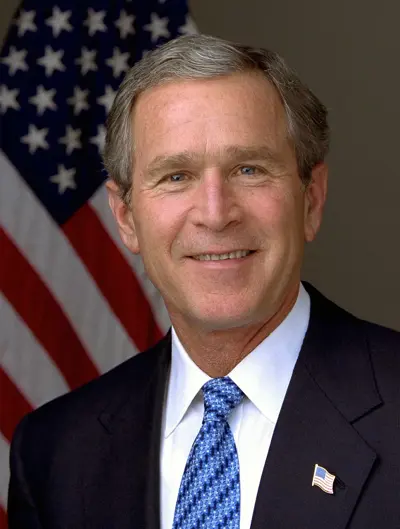
George Walker Bush is an American politician and businessman who served as the 43rd president of the United States from 2001 to 2009. A member of the Republican Party, Bush previously served as the 46th governor of Texas from 1995 to 2000. He was born into the Bush family; his father, George H. W. Bush, was the 41st president of the United States from 1989 to 1993.
