Theodore Roosevelt Quotes
I am in the worst hole politically I have ever been in my life. The whole Catholic Church is on my back…. What a lecherous lot of scoundrels the Spanish friars are.
The United States was governing the Philippines after the Spanish American war. Most Filipinos were Roman Catholic and before the Americans even took over there were a large number of Catholic priests who were sexually active in different ways. Many had housekeepers/concubines, others had relations with women who they learned were vulnerable in the confessional. Still others were homosexuals and preferred young boys. Americans were much more prudish than many other countries where lecherous men of the cloth had a long history. The American authorities simply removed these priests not realizing that there was still with many countries laws and traditions that left the disciplining of clergy, even for criminal matters, to the religious authorities. The Catholic Church was then very defensive about sexually predatory priests. The Vatican made many protestations that the U. S. Government were interfering with the prerogative of the church to run its own religious affairs. American Catholics and Catholic leaders also complained about the religious “interference”. Roosevelt knew full well that the Church had done little or nothing about the Filipino lecherous priests before the Americans took over, and he had no confidence that they would do so in the future. And he was adamant that religious officials should be subject to the civil law and civil authorities for behavior of all citizens with no exemptions for clergy. When the Catholic church realized the poor PR that they were getting from the worst priestly offenders, it tended to back off overt confrontation, and came to a diplomatic agreement with America over the issue. Most countries resolved this issue the way Roosevelt and the Americans did. Clergy were subject to civil law in all things.
Theodore Roosevelt, 1858-1919, 26th President of the United States (Republican, NY) Letter to Herman Kohlsaat, August 4, 1902
Sourced by: Eigen's Political and Historical Quotations


The Pope was justifying his earlier excommunication of Holy Roman Emperor Henry IV who in turn excommunicated Pope Gregory.

This is only one of many anti-American and anti-Israeli and anti-Semitic passages in the text. It is typical of much of the Wahhabi literature which also supports jihad and violence. Much of the funding for the Wahabbi comes from the Saudi Arabian Government and members of the Saudi Royal Family. There is total censorship in Saudi Arabia and nothing gets preached or printed if the Saudi government wishes otherwise. However, most of the imams in Saudi Arabia are Wahhabi and are paid by the government. The Royal Family’s only fear of losing power is if the Islamic clerics claim that the government is not supportive of Islam. They spend much money to buy their lack of opposition to the monarchy. The government position however is contrary to these hate-filled textbooks.


Ingersoll was considered to be the greatest orator and political thinker of his day, but his overt atheistic views curtailed his elected political career.

Son of Reverend Billy Graham. The statement was made in the aftermath of September 11.

Two were executed and the others sent to the Gulags. This is often quoted to show how hostile the Soviet Union was to all religions.

This quotation so impressed Thomas Jefferson that he wrote it in his Commonplace Book.


The “enemy of the human race” is the Devil, Note that the Pope labels as “allies” of the Devil those who advocate and participate in slavery. Slavery was not only immoral, but the Devil was behind it all. The fact that slavery persisted on a massive scale by Catholic countries illustrates that while the Pope was a powerful leaders and figure, even he could not influence all the “sinners.”


These were the most terrible and restrictive laws against Jews who would be hunted down and forced to accept Christianity. The Visigothic laws were a combination of Visigothic tradition and the codification by Catholic Clerics. Many scholars have traced the terrible policies and practices against Jews by the Spanish throne and the Inquisition 500 years later to these earlier Spanish Visigoths and their formal legal structure. This is the most formalized and sophisticated compendium of laws of the so-called “barbaric peoples” of Europe. The compilation was in many ways a documentation of the traditional laws of the Visigoths that had evolved over hundreds of years.

Although English, Cobett spent time in America and published a newspaper, The Porcupine Gazette, in Philadelphia. We was very conservative but on the issue of slavery his resembled a liberal point of view. He never used sugar, coffee, or rum because slave labor produced them. However, he advocated legally enslaving lazy people, blacks and whites, who would not work.


In the quoted passage, it describes Diogenes as observing a thief being arrested in one of the religious temples by the officials of the temple. He had pilfered one of the temple treasures. Not unlike modern times, most religious organizations raised money be getting donations from the public. Some of the means of many of the religious groups are and have been of dubious morality and if used in commerce would generally be considered fraud. This quotation shows that this is not a new phenomenon nor was it limited to monotheistic religions.

Of all the Western Colonial Powers, Spain was the worst. They took the most from their possessions and contributed the least. Worst, they killed off almost all the indigenous people.

Sometimes referred to as Gaspar de Toledo. This quotation Illustrates one of the ways that Churches maintained power over the secular government even though they were supposedly separate. By maintaining control over the secular leaders consciences and sense of morality, the Church could control the secular government. In this particular historical case, there was not even a supposed separation. The Confessor had an ex officio role in the high council. See {629457}.

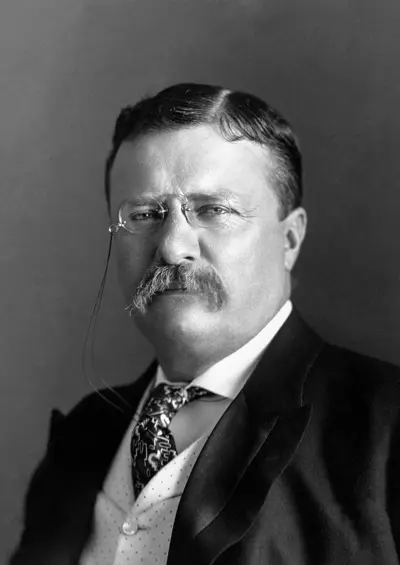
Theodore Roosevelt Jr., often referred to as Teddy or his initials T. R., was an American statesman, conservationist, naturalist, historian, and writer, who served as the 26th president of the United States from 1901 to 1909. He previously served as 33rd governor of New York from 1899 to 1900 and the 25th vice president of the United States from March to September 1901. Roosevelt emerged as a leader of the Republican Party and became a driving force for anti-trust and Progressive policies.
