Eleanor Roosevelt Quotes
I am entirely in accord with the idea that it is hardly worthwhile to try to give a better way of life to those who will not work and help themselves, but there are many, many people who work hard and for one reason or another have very little return for their labor.
Eleanor Roosevelt, 1884-1962, First Lady (Franklin Delano Roosevelt), U. S. Delegate to the United Nations, Column, My Day, May 31,1937
Sourced by: Eigen's Political and Historical Quotations


Mormons in later years found this principle difficult to enforce where there was unemployment and workers were idle through no fault of their own. The local Mormon churches were very active in encouraging wealthier Mormons to hire those who were unemployed.

This clause is an interesting combination of liberal and conservative ideas. The former was the fact that it was the society’s obligation to provide jobs for the willing workers and welfare for the needy. At the same time, there was to be no assistance to the people who would not work—a classic conservative welfare reform.


They lost. Sweden had a combination of a high standard of living, a very robust and effective social safety net and a high marginal income tax rate. For Swedes who do not work, life is far better than for employed people in most other countries. For those who work, they pay a large proportion of their earnings as taxes. So the very hard worker is left with comparatively little advantage over non workers. Conservatives have always warned that this is a formula for economic stagnation as few people will work. The reality in Sweden and a few other nations, is that the vast majority of the Swedes choose to work—but they work not to survive, but for reasons which range from interest in their work, the social interaction of the workplace, the desire to create things and make a difference in society. Even in America there are many who work who do not need the money and are motivated by non-monetary factors.

This appears to be one of the first expressions of the 'workfare' concept.


Nixon’s view was very popular, except the reality of the welfare system was much more complicated than most people thought. A very large percentage of the adults on welfare were women with young children. There was no practical way for them to work unless there was some mechanism for caring for the children. Most of these women could only earn minimum wage which was not enough to cover the cost of child care. Providing child care would then cost more welfare money for this investment and politicians, even those hating the welfare system as it was, would not make this investment which would have dubious payoff. Training the women for better paying jobs and covering their child care in the process, works but the investment is very large and gives the government even more control of American life so there has never been a consensus for this. In other cases, women could get work but not having an automobile, they could not get to jobs in most of the United states. Further, requiring welfare recipients to work, collapsed when the economy was in recession. Many women just could not find jobs, and even when the government provided assistance, the state of the local economy determined whether or not workfare was practical.


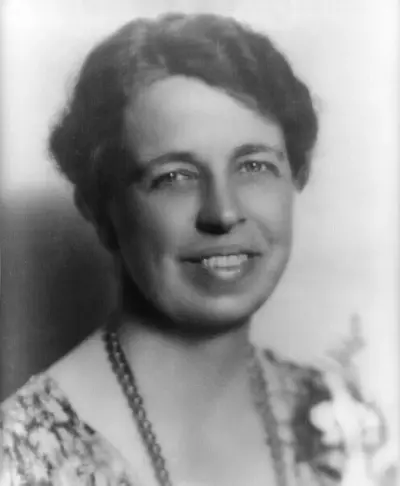
Anna Eleanor Roosevelt was an American political figure, diplomat and activist. She served as the First Lady of the United States from March 4, 1933, to April 12, 1945, during her husband President Franklin D. Roosevelt's four terms in office, making her the longest-serving First Lady of the United States. Roosevelt served as United States Delegate to the United Nations General Assembly from 1945 to 1952. President Harry S. Truman later called her the "First Lady of the World" in tribute to her human rights achievements.
