Charles Gravier Quotes
I am beginning to have a poor opinion of their firmness. Their Republic, unless they correct its faults, ... will never be more than a feeble body capable of little activity ... I must own that I have little confidence in the energy of the United States.
After the American Revolution the process of nation building began and it was a bit of a mess. This caused a loss of confidence on our most important ally—France. It would be 9 years more before we could get a Constitution developed.
Charles Gravier, 1717-1787, Comte de Vergennes, French Foreign Minister, Description of the American revolutionary situation by our chief ally, Dispatch to French Ambassador to Spain, Armand Marc, comte de Montmorin de Saint Herem (1745-1792), November 27, 1778
Sourced by: Eigen's Political and Historical Quotations

Daymon was the librarian of Carpenter Hall and had been the go between for French secret agent Julien Alexander Achard de Bonvouloir and the Americans. This was the first contact with the French Government to try to ascertain how they would react to an American rebellion against the English. Draper, Franklin and John Jay were risking their lives and under British law, committing treason. Draper provided Carpenter Hall for the secret meetings and acted as the scribe and sometime translator. This is one of the earliest quotations indicating serious thinking and planning for a revolution.


For his seditious activities he was sentenced to penal servitude for life. He escaped and came to America where he entered politics

Most Canadians supported the English despite the letter.


The French Revolution was out of control and terribly bloody. Most Americans and even English who supported the principles and reasons for the French revolution ceased their support because of the Reign of Terror. Jefferson, however, saw a link between France and American democracy and was reluctant to end support.

There were many Americans who were Tories and proBritish. There were also many who, while they were not pro British, were not enthusiastic about the Revolution and the death and devastation that it brought. In France however, the American Revolution was seen in much more romantic and theoretical terms. See {621958} and {621957}.

This was one of the reasons that there was support for the American Revolution in France.
The enthusiasm for the American Revolution caught the imagination of many throughout Europe. See {631977}.


Beaumarchais had provided the Americans with credit in the amount of ½ million French Livres. However, Beaumarchais served the French King Louis XVI as a spy and advisor on foreign affairs. The money had been secretly provided by the French government to help the American cause while still being able to officially deny to England that they were in any way involved in the rebellion. The American agent, Silas Dean, who arranged for the loan saw through the ruse. See {624186} and {624184}.
Beaumarchais served the French King Louis XVI as a spy and advisor on foreign affairs. He was instrumental in influencing the French King and his government to tilt in favor of the American Revolutionaries.

The French were carefully watching the events in the American Colonies.
He was acting as French Foreign Secretary at the time.


Lafayette was so engrossed with fighting in the Revolution that he really did not have a true picture of the total American attitude on slavery. He had fallen in love with the American idea and ideal based on the writings of intellectuals like Paine and Jefferson. Most of his time in America was spent with George Washington. The few American leaders he talked with were Northerners and/or intellectuals who were not rabid enthusiasts for slavery or were opposed. Slavery was so contradictory to the Declaration of Independence, Lafayette assumed that after the war was won and America was independent, the Americans would surely abolish slavery. After the Constitutional Convention many people were disappointed that the delegates had given in to the Southern slavery bloc. None more so than Lafayette.

This was a terribly accurate prediction of what occurred in South America. However even the smaller states then began to have self destructive cycles of destructive revoutions.


See {636935}for the policy decision that triggered this order.
during and after the American Revolution
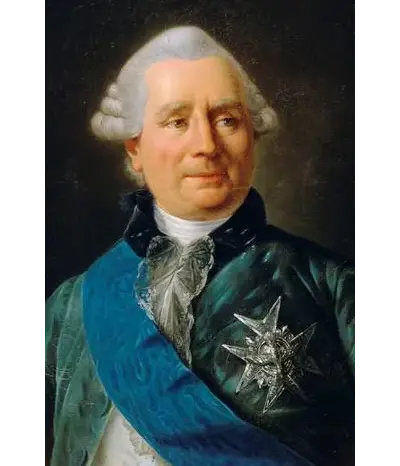
Charles Gravier, Count of Vergennes was a French statesman and diplomat. He served as Foreign Minister from 1774 during the reign of Louis XVI, notably during the American War of Independence.
