Simon Bolivar Quotes
A few [South American territories] will constitute themselves as conventional federal republics; almost inevitably the larger territories will establish monarchies, some so wretched that they will devour their natural and human resources in present and future revolutions.
This was a terribly accurate prediction of what occurred in South America. However even the smaller states then began to have self destructive cycles of destructive revoutions.
Simon Bolivar 1783-1830, South American Colonial Liberator, President of Venezuela and Columbia, 1815, Quoted in Foreign Affairs, May-June 2013
Sourced by: Eigen's Political and Historical Quotations


The French Revolution with the rise of Napoleon was a classic example. The American Revolution was an exception.

The Romanovs were the family of the Russian Czars while the Hapsburgs were the family names of the Emperors of Austria. The Austrian Army Chief of Staff hated the Russians and was constantly urging war against Czarist Russia. The archduke, the heir to the Austrian throne, was constantly arguing against attacking Russia. When Franz Ferdinand was assassinated, it triggered WWI. He was no longer able to have a voice against war, and Austria and Russia were soon at war. At the end of WWI, the Austrian Empire—an ally of Germany was broken up and the Russian Revolution ended the Romanov dynasty. The Archduke was absolutely right.


China, after overthrowing the Manchu Dynasty was struggling among many factions for control of the government.

Louis Napoleon had lead a military takeover or the French democratic republican government. The other great European powers, with the exception of England and Belgium at the time did not have parliaments or they were powerless and the countries were all monarchies with most of the monarchies and the aristocracy hateful of anything involving sharing their power with legislatures. This is despite the incredible success of England with its Constitutional Monarchy and Queen who was very pleased with it.


Many people think that the French Revolution was spontaneous. Some events at the beginning were, but de Gouges and other political observers cold see that disaster was looming.


The Ambassador of Bavaria represented an area where the politicians saw democrats and socialists as their great enemy, as did many of the leading right wing conservatives in all of Germany. They believed that a great war would give them a chance to crush democratic socialism in Europe. Bethmann warned that just the opposite might result, and indeed it did. He was correct. Many of the crowned heads of Europe were deposed and the democratic socialists emerged as a major political factor in the victorious democracies. Bethmann-Hollweg, however, was not a strong leader and could not prevent the Conservatives, the military leaders, and Kaiser Wilhelm from initiating WWI.

Many American colonists had relatives and friends in England, and Paine argued that American independence would help and not het the English people.
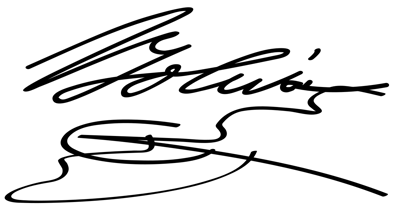
Simón José Antonio de la Santísima Trinidad Bolívar y Ponte Palacios y Blanco (Spanish: [siˈmom boˈliβaɾ] (listen), English: /ˈbɒlɪvər, -vɑːr/ BOL-iv-ər, -ar also US: /ˈboʊlɪvɑːr/ BOH-liv-ar), also colloquially as El Libertador, was a Venezuelan military and political leader who led what are currently the countries of Venezuela, Bolivia, Colombia, Ecuador, Peru, and Panama to independence from the Spanish Empire.
