Muammar Qaddafi Quotes
I am a prophet…I am a prophet … I am a prophet…
According to Fallaci, he had a psychotic episode in the middle of the interview and kept repeating the statement over and over again. She urged him to sit and kept repeating to him, “Yes, you are a prophet” each time he uttered the phrase and after a few minutes the episode subsided.
Muammar Qaddafi, Chief of State, Libya, Interview with Oriana Fallaci, Quoted on PBS The Charlie Rose Show, December 7, 1992
Sourced by: Eigen's Political and Historical Quotations


Bush made religion a driver of his Presidency and policies in a way far in excess of other American Presidents. See {633550}. There has always been some debate as to whether he actually believed that or he was just saying it to pander to the religious conservatives who formed an important component of his base.

Jorge Mario Bergoglio. Prophecy makes people face the prospect of change. As with new technology, it often brings creative destruction along with the changes.


The King assumed the role of head of the Church of England.

There was a continuing power struggle between the more powerful kings of Europe and the Roman Catholic Pope. This struggle however was not one of church and state. Neither the kings nor the clergy viewed the two as separate domains. Instead they saw the two in much the same way as the ancient Jews and many contemporary Muslims view relationship—as an inseparable amalgam. However there was much debate over who could best protect and manage the amalgamated entity. In this case Alcuin was arguing that Charlemagne could ensure the well-being of the church better than the Pope. The power struggle went on for centuries between more or less able, powerful, and corrupt kings and popes.

Jorge Mario Bergoglio
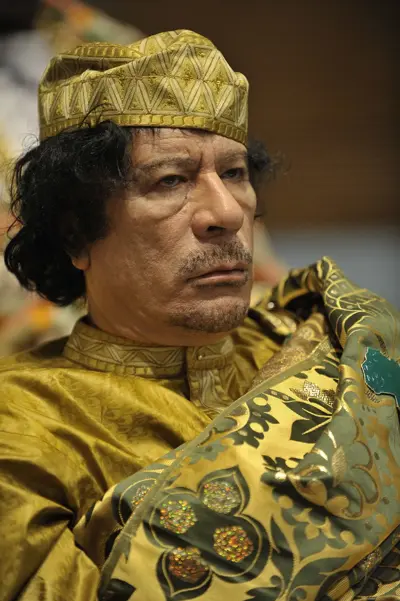
Muammar Muhammad Abu Minyar al-Gaddafi, commonly known as Colonel Gaddafi, was a Libyan revolutionary, dictator, politician and political theorist. He governed Libya as Revolutionary Chairman of the Libyan Arab Republic from 1969 to 1977 and then as the "Brotherly Leader" of the Great Socialist People's Libyan Arab Jamahiriya from 1977 to 2011. He was initially ideologically committed to Arab nationalism and Arab socialism but later ruled according to his own Third International Theory.
