Galileo Galilei Quotes
I abjure with a sincere heart and unfeigned faith, I curse and detest the said errors and heresies, and generally all and every error and sect contrary to the Holy Catholic Church.
Galilei, Galileo. "Abjuration." 22 June 1633. The Galileo Affair: A Documentary History, edited and translated by Maurice A. Finocchiaro, University of California Press, 1989, p. 292.


This decree is an example of the Catholic Church’s official response to the advent of slavery in the New World. Slavery here should be distinguished from what the Catholic Church called “just title” slavery, which approved of the practice in circumstances in which the person was deprived of their liberty justly. Specific examples have included slaves captured in war, persons condemned to slavery for a crime, and those who sold themselves into slavery. For an example of a type of “just title” slavery being legitimatized, see Nicholas V {612174}. The practice of enslaving entire ethnic groups like South American natives was, however, “never before heard of” and was immediately condemned. In many cases the line between slavery for no morally justifiable reason, i.e. racial slavery, and “just title” slavery remained unclear to Catholic laity and clergy alike.

Diversarum Hereseon Liber. This compendium of heresies would be funny but for the fact that people lived and died according to their “acceptance” of some of these absurdities.
While the Visigoths had some very advanced legal principles, this law, quoted in its entirety is typical of the nations that were part of the Catholic world. The church and its doctrines were immune from any possible criticism, explicit or implicit. This is the most formalized and sophisticated compendium of laws of the so-called “barbaric peoples” of Europe. The compilation was in many ways a documentation of the traditional laws of the Visigoths that had evolved over hundreds of years.


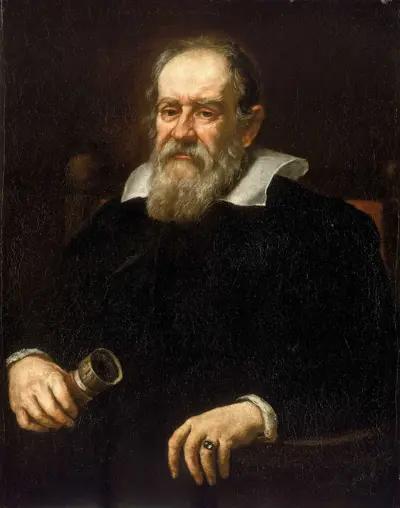
Galileo di Vincenzo Bonaiuti de' Galilei was an Italian astronomer, physicist and engineer, sometimes described as a polymath, from Pisa. Galileo has been called the "father of observational astronomy", the "father of modern physics", the "father of the scientific method", and the "father of modern science".
