Tertullian Quotes
How shall I admire, how laugh, how rejoice, how exult, when I behold so many
proud monarchs groaning in the lowest abyss of darkness; so many
magistrates liquefying in fiercer flames than they ever kindled against the
Christians; so many sages philosophers blushing in red-hot fires with their
deluded pupils; so many tragedians more tuneful in the expression of their
own sufferings; so many dancers tripping more nimbly from anguish then
ever before from applause.
Tertullian. On the Shows. The Ante-Nicene Fathers, Vol. 3, edited by Alexander Roberts and James Donaldson, Christian Literature Publishing Company, 1885, p. 91.


Action he advocated to his followers who attacked and killed pro-slavery advocates in Kansas. The civil war of Kansas was over whether Kansas would enter the Union as a slave state of a free state. If a free state, the free states would be able to block further slavery. If Kansas were to become a slave state, the slave states would have a sufficient majority to make all future expansion hospitable to slavery. The slavery forces started sending man and families into Kansas so that they could vote; the abolitionists did the same. Both sides armed and a war began with each faction trying to kill or drive the other faction out of Kansas before the vote. See {617388} and {612516}.


Referring to one of his harshest critics, Rev. Jerry Falwell:

In the 18th Century, the Islamic Barbary States combined their religious beliefs for Jihad against non believers with a classic criminal enterprise. They would authorize cosairs to outfit ships and attack Christian merchant ships on the high seas. They would capture the ship and the cargo, which would be split with the ruler of the country. The crew and passengers would by “rented out” as slaves until they would be ransomed, the proceeds of which would also be shared. To motivate a larger ransom, the captives were regularly tortured as well as worked almost to death. The Barbary Pirates encouraged the “slaves” to write to their relatives, friends and governments to try and raise the ransom. O’Brien’s ship was captured in 1785. He had been a slave for 4 years when he wrote this. See for a quote from a letter he sent Congress. Finally, after 10 years, O’Brien and those of his crew that were still alive were finally freed. O’Brien’s unusual experience and knowledge of the Barbary States qualified him as an expert and he was then appointed Consul-General to Algiers. Individual Christian countries were offered a “treaty” whereby for an annual payment of tribute to the Barbary country, the corsairs of that country would not attack ships flying their flag. The Christian country had to make 4 different tribute payments to each of the Barbary nations. Most of the European powers were paying the tribute even though some could easily defeat the Corsair navies in a war. The cost of outfitting a fleet for war was much more costly than paying the tribute. The new nation of the United States was good pickings for the Barbary pilots and there was a period of several decades where the Americans had to create a policy to pay tribute or go to war. At different times America did both.

In addition to the immense secular powers that can be used to obtain obedience, in a theocracy, there is the additional weapon of damnation. See {628182} for his use of some of the others.


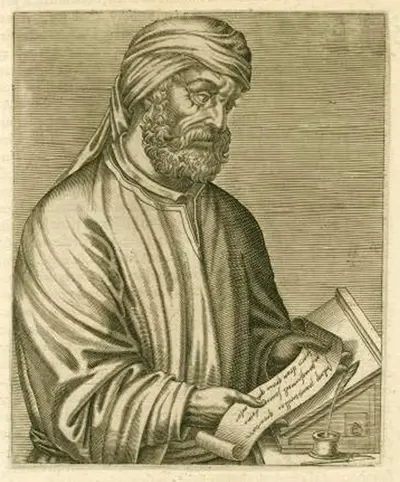
Tertullian (/tərˈtʌliən/; Latin: Quintus Septimius Florens Tertullianus; c. 155 – c. AD 220) was a prolific early Christian author from Carthage in the Roman province of Africa. Of Berber origin, he was the first Christian author to produce an extensive corpus of Latin Christian literature. He was an early Christian apologist and a polemicist against heresy, including contemporary Christian Gnosticism. Tertullian has been called "the father of Latin Christianity" and "the founder of Western theology."
