Howard Berman Quotes
How much greater would their contributions to the U.S. economy be if U.S. copyright owners could access foreign markets otherwise dominated by pirate product?
Berman, Howard. "Issues: Intellectual Property." Congressman Howard Berman, U.S. House of Representatives, 2008.


Executed by the English for his part in the Easter Uprising. Although a century ago, Connolly captured the centrality of the development problem of every Third World County trying to compete in a global economy. The irony is that Ireland, long after achieving Independence, had the lowest standard of living in Europe for years. The great Irish breakthrough came as the result of the government making a huge national investment providing the capital for giving all of Ireland access to the Internet and passed laws for the information age. The Irish people took it from there. They leapfrogged wealthier nations and found customers all over the globe because they had the infrastructure to reach the rest of the globe just as fast as anyone else. See {589760} for Connolly’s idea to bring technology of the time to Ireland. The Irish information revolution was accomplished by using this idea for information technology instead of farm technology.


In the early years of our nation, there was not much intellectual property being developed in America. We were an underdeveloped nation, and we took whatever we could get regardless of laws. Alexander Hamilton for example urged obtaining industrial trade secrets and even machines by whatever means was necessary. However in the latter part of the 19th century, Nathaniel Hawthorns, Mark Twain and other creative Americans persuaded the government to join copyright conventions; we had become the victim of intellectual piracy rather than the pirates. Then we became the leading nation in advocating and enforcing intellectual property rights. This coincided with our becomng the leading producer of intellectual property. Intellectual property rights has always been an issue of “whose ox was gored.” The US position is somewhat hypocritical given our early history. However, respect for intellectual property rights, we now argue, in our modern global economy will encourage businesses to not only invest in developing countries but allow their technology and trade secrets to be used in the developing nation.

The most successful way of poor nations developing rapidly is to trade with rich nations.

Note that the only reason given in the constitution for protecting intellectual property was to promote the progress of science and useful arts. Inventors, would keep secret their inventions and techniques of manufacture and use in order to protect their economic interests. No one else would be able to benefit by understanding the invention and taking it further and increasing knowledge and understanding. So the Founding Fathers told Congress to establish a system where inventors would get a guarantee of a reasonable time to profit exclusively from the invention in exchange for making the invention public. The plans, methods and drawings had to be made public and until the 20th century a model of an invention had to be supplied to the Patent Office. Anyone could get an inexpensive copy of any patent and come and study the models. Today, most people believe that the reason for a patent system is to protect the intellectual property of the inventor, but that was not a purpose or even a serious consideration. The reason however was educational and to demystify technology and produce more science and technology which it did.


At first, there is an advantage to not recognizing copyright and allowing stealing from foreign publishers, but soon the point is reached where the practice precludes the country from developing its own writers and journalists. The same will likely be true for China and other nations where international copyright is not recognized or not enforced.

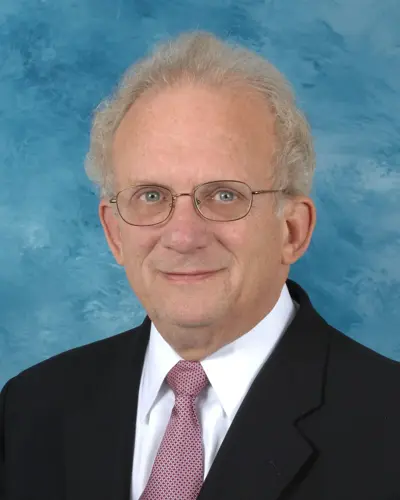
Howard Lawrence Berman is an American attorney and retired politician who served as a U.S. Representative from California from 1983 to 2013. A member of the Democratic Party, he represented the state's 26th congressional district until redistricting and 28th congressional district until losing his reelection bid—which both encompassed parts of the San Fernando Valley—for respectively ten and five terms.
