Barry C. Black Quotes
Holy God, you created us for freedom, so keep us from shackling ourselves with the chains of dysfunction …. Lord, deliver us from governing by crisis.
That 113th Congress was the most unproductive in history. It was so bad, that even the Senate Chaplain prayed for a change.
Barry C. Black, Seventh-Day Adventist Minister, U. S. Senate Chaplain, Rear Admiral & Chief of Chaplains of the United States Navy, Prayer opening the Senate, September 27, 2013
Sourced by: Eigen's Political and Historical Quotations


FDR was a marvelous judge of men and their character. De Gaulle could not separate himself from France and pushed the French Republic towards one man rule (himself) as much as anyone since Napoleon Bonaparte.


This is a very important quotation. It explains in great part, why there have been so few internal revolutions in Muslim countries. Al-Ghazi’s interpretation of Islamic Law and Theology concluded that even if the ruler is incompetent, corrupt, or destructive he should be supported and obeyed by all good Muslim citizens. The reason was that anarchy and/or chaos was an evil much worse for the Islamic community. There was one exception in the case of a ruler who was blasphemous or did not follow Islam. Then it was the duty of good Muslims. Since then, the ruler of an Islamic state, first seeks to ingratiated himself with the clergy. In Saudi Arabia, for example, the Royal Family gives enormous sums to all the clerics. They then urge dissidents and would be revolutionaries to accept the Royal Family with its flaws and shortcomings and accept their lack of freedom and human rights. And they tell all that the King and his family are all religious and support Islam. Therefore any revolt would be a tantamount to a sin. The Christian world had a different technique for inhibiting Revolution. Christian rulers claimed the Devine Right of Kings—that God had selected and ordained the king to lead. Regime change was contrary to the word of God. In a sense, the Islamic approach is more intellectually honest and seems to have worked much better than the Christians who have had so many revolutions. Better that is from the rulers point of view. From a democratic, Jeffersonian point of view revolting against an evil ruler was almost a moral obligation, and Al-Ghazali’s principle is all wrong and is keeping the Muslim countries from reaching democracy.

After Adams’ term as President, he was elected to the House of Representatives where he served for the rest of his career. He was constantly calling for the emancipation of slaves (see {77463}) in the House debates. The Southern Congressmen were so offended by this that they got the majority of the House to pass a rule that made using the word “slavery” out of order. It was called the “Gag Rule”. Adams, one of the best legislators and lawyers of his day, then started reading in the House debates petitions of his constituents calling for an end to slavery. The Southerners called for the Speaker to declare him out of order for violating the gag rule. But Adams pointed out that the Constitution gave citizens the right to petition Congress with no controls on the petitions. Therefore the reading of the petitions was Constitutionally mandated and trumped the Rules of the House. He then arranged to have many petitions submitted which he dutifully read on the House floor to the extreme anger of the Southerners.


What was particularly interesting about this quotation is that Pinkney was a political leader of Maryland, a slave state. See {632258} and {632257} for more on this point.


His admonition did little good. That Congress passed fewer bills than any other in history.


The 113th Congress, the most unproductive in history was hyperpolarized with some members not at all interested in anything their opponents had to say.


That particular Congress was the worst in American history in terms of passing legislation. Mainly there was philosophical gridlock between conservatives and liberals and worse between Tea Party Conservatives and mainstream conservatives. The Iraqi legislature was gridlocked religiously between Sunni and Shiite Muslims.

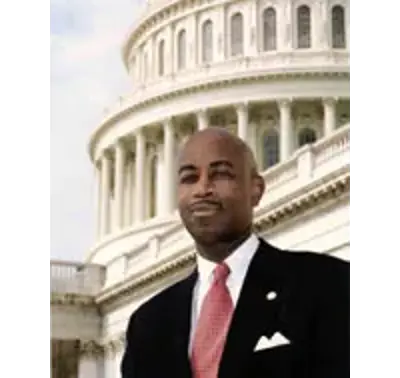
Barry Clayton Black is the 62nd chaplain of the United States Senate. He began serving as Senate chaplain on June 27, 2003, becoming the first African American and first Seventh-day Adventist to hold the office. The Senate selected its first chaplain in 1789.
