Gray Davis Quotes
Here is my general approach to the energy companies. You have already charged the utilities a 50 percent credit penalty for the power they were buying from you. You're charging us a penalty. You're not going to get two bites of the apple here.
Davis, Gray. Interview. Frontline: Blackout, PBS, 5 June 2001.

This is an interesting quotation because it shows that utilities and monopolies using their power and money to avoid effective pro consumer regulation is nothing new and was ongoing as soon as there were government granted monopolies that were supposed to be regulated.


Railroads and other large markets shared dominated by a few large corporations.


Samuel Langhorne Clemens, 1835-1910. Bribery of Congress and other legislatures was very common at that time. In modern times, bribery has become less common, with the function being assumed by campaign contributions. Relative to the cost of living, these “prices” in the modern era are far greater than the bribery prices of the 19th Century.


The Black Plague, which raged in Europe from 1347 to 1349, had left relatively few able bodied people alive. Given this shortage of labor there was a rapid inflation, especially to the distress of the landed class who had to pay much more for their food. The king therefore established what amounted to price controls, wage controls and forces labor. See {611125} and {611126}

Lock’s view differs from modern American business ethics and law. He argues that regardless of circumstances a merchant may charge anything and that all consumers must be treated equally, which would eliminate preferred customers or even automobile sales practices where prices are negotiated for most vehicles. See {616334} to see how he deals with necessities of life: as issues of charity—not economics.


This is a very interesting quotation in that right wing parties are usually opposed to any kind of Government ownership and control of business and industry. However, Fascist parties have usually wanted to commandeer business and industry for the central purposes of the dictatorial state. The French National Front Party had its roots in the WWII French Vichy Government—which was allied with the Nazis to bring Fascism and racism to France.


In addition the companies that are being protected suffer by not getting competitive and not utilizing the most modern and most efficient techniques. Even construction workers are hurt as protected companies do not modernize their facilities as often and build new plants.
This would seem a much easier solution to the problem of monopoly holders charging outrageous prices than trying to fix profits or lay a large tax on the profits. However, few governments ever do this. In many cases the patent holders control or heavily influence the government. There is in addition, in most Judeo-Christian societies an assumption that most people have a moral sense and will not take undue advantage of customers just because they have the power to do so. And in the most egregious cases of monopoly pricing there were many other patents where the inventors were not gouging the consumers. It is always been the minority of businesses that have taken gross advantage of patent monopolies. However at some periods, where there was an oligarchy, all the companies in an area abused their patent monopolies together. An example would be the pharmaceutical industry of the early 21st century.

Most businesses attempt to gain monopolistic positions and avoid price and other competition as much as possible. See {633636} .

While this statement seems totally absurd to us today, at the time most politicians and judges believed it. Only the left wingers and the populists opposed the doctrine as well as most business owners who knew the truth but of course most preferred the have their own monopoly. One of the reasons the large American corporations did not want Jewish and Chinese immigrants is that those cultures supported highly competitive businesses and might give consumers a better deal or worse, their culture would argue for less monopoly and more competition. For more than half a century AT&T was given a monopoly over almost all telephone service in the United States. Finally the Federal Courts saw through the company propaganda, and ordered AT&T broken up. The “Baby Bells” have persuaded most state legislatures and regulatory bodies of this same argument, and almost every community of the United States has a monopoly on local wired local telephone service. The same is true about water and electricity and a great deal of American transportation. Every major company strives for as much of a monopolistic position the government will allow; some are overt like the electrical companies. Others are more subtle and use copyright and patents to be sure that there is no price or service competition. Fortunately, the high tech industry is to technologically competitive that prices have been have been going down constantly not like telephone and Internet connectivity, entertainment, education, and professional services.


Innovative science and technology from Edison and Tessla had produced an electrical industry that rapidly formed into a monopoly.


[These new "extra fees" for baggage, schedule changes, getting a good seat, etc are a new in the industry where most of the few airlines would rather match the fares and fees of the rest, rather than compete and get a larger market share. Interestingly, the best run and most profitable airline, Southwest, does not charge most of these new fees. Also, the airlines business has over the years not been very profitable. The nature of the industry makes it difficult for most airlines to make steady profits year after year, so many tend to be hogs and take advantage of consumers whenever they had the opportunity.]
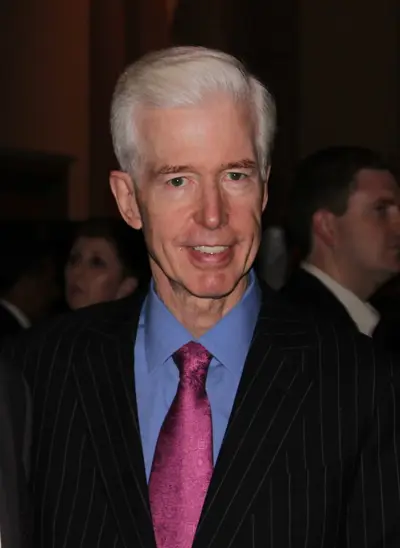
Joseph Graham "Gray" Davis Jr. is an American former attorney and politician who served as the 37th governor of California from 1999 to 2003. In 2003, only a few months into his second term, Davis was recalled and removed from office, the second state governor successfully recalled in U.S. history. Prior to serving as governor, Davis was chief of staff to Governor Jerry Brown (1975–81), a California State Assemblyman (1983–87), California State Controller (1987–95) and the 44th lieutenant governor of California (1995–99). Davis holds a B.A. in history from Stanford University and a J.D. from Columbia Law School. He was awarded a Bronze Star for his service as a captain in the Vietnam War.
