Eric Hobsbawm Quotes
He[Napoleon] had destroyed only one thing: the Jacobin Revolution, the dream of equality, liberty and fraternity, and of the people rising in its majesty to shake off oppression. It was a more powerful myth than his, for after his fall it was this, and not his memory, which inspired the revolutions of the nineteenth century, even in his own country.
Hobsbawm, Eric J. The Age of Revolution: Europe 1789-1848. Weidenfeld & Nicolson, 1962, p. 73.


Honore Gabriel Victor Requiti. The French King had just opened the French National Assembly which contained deputies (delegates) from the clergy, the nobility and the people. The King had made what some deputies thought was a very constructive and responsible speech opening the assembly. Mirabeau observed that as long as there was an absolute monarch in place, even a benign one. It was the presence of a monarch itself that was evil.


While France was in the midst of a violent revolution, the American debate was on the power and prestige of the Presidency. Then Vice President John Adams was a proponent of a strong executive. Most others were not.

At the time, Capetown was under the control of the Dutch East India Company which had recruited Gordon from Scotland. There was a wave of liberality following the Enlightenment, the American Revolution, and the very vocal English, anti-slavery, reformers. The Dutch were concerned mainly with making money, and that they thought that meant stability and the status quo. Gordon was their strong spokesman on this. Like American Southern slave owners, Gordon read the Bible as God endorsing slavery and the inferiority of Blacks. Thus, reformers did not "believe in God any more".


The slogan was made famous by James Larkin, 1875–1947, Irish trade union leader who used it frequently and whose memorial statue in Dublin contains the quotation in French, English and Irish.


Despite his speeches like this one, he was a ruthless dictator who then before his death in 2000 handed power to his son.

The revolutionists were disorganized and unfocused after the Coup that brought them to power. This speech provided some focus for a while. Early in his career, as a Journalist working in Leiden, Holland, he was very active and helpful to the Dutch Patriots and Revolutionaries in their takeover of the government. He helped draft the New Dutch Constitution and participated in most of the new governments conventions.


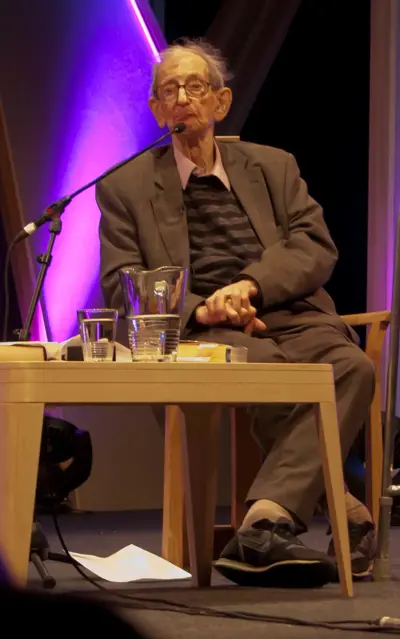
Eric John Ernest Hobsbawm CH FRSL FBA was a British historian of the rise of industrial capitalism, socialism and nationalism. A life-long Marxist, his socio-political convictions influenced the character of his work. His best-known works include his trilogy about what he called the "long 19th century" (The Age of Revolution: Europe 1789–1848, The Age of Capital: 1848–1875 and The Age of Empire: 1875–1914), The Age of Extremes on the short 20th century, and an edited volume that introduced the influential idea of "invented traditions".
