Krzysztof Kieslowski Quotes
Do people really want liberty, equality, fraternity? Is it not some manner of speaking?
Stok, Danusia, editor. Kieślowski on Kieślowski. Faber and Faber, 1993.


This line was quoted by President William Clinton in his Beijing University Speech in June 1998


In the election of 1800, the Jeffersonian republicans were pitted against the John Adams Federalists. The latter had seen the revolution as against the excesses of England and King George and not necessarily against the notion of a class society where government served the interests of the upper class—a political battle that is still with us to some extent. The Jewish religion generally recognizes no right of theocratic authority of one man over others with all to follow the laws of God, was theologically very republican. Rabbis were teachers and had no theological or civil authority. To Nones and many other Jews the Jeffersonian ideals were very close to their religious and cultural tradition and to the extent that there has been a party of the classes and a party of the masses, most Jews had gravitated to the latter with the exception of merchants, bankers and others whose economic interests were with the right of center party.


Helen Suzman, 1917–2009 was a white South African member of Parliament representing Capetown. She came from a Jewish English background and was the leader of the Progressive Party which was the opposition to the Nationalist party that had established the Fascist style Aparteid government where the 10% white population dominated and ruled the 90% black and Asian population. When all the other progressive MPs lost their seats, Suzman was the only member of the South African Parliament who totally opposed the racist apartheid of South Africa. She had little power to change or block Apartheid laws being only a single MP, but her eloquence and vigorous verbal demand for freedom and equality for blacks provided a focal point for foreign boycotts to produce change in South Africa. However, she did not publicly advocate revolution and violence. As a result most of the militant blacks did not value or even follow her activities to end apartheid, and many had no idea who she was. However, Mandela, imprisoned on Robin Island at the time, not only followed her activities, but sent frequent compliments and notes of encouragement to white opponents of the government and apartheid even though many did not support the armed violence that had become necessary to produce change. Mandela knew that there would be core of a white leadership that would favor one-man-one-vote which would make South Africa a black-dominated government when the apartheid Nationalists could be defeated. Mandela was like a great chess player playing a current game but thinking 5 and 6 moves in advance even while in prison. Suzman was one of Mandela’s leading white supporters after the regime change.

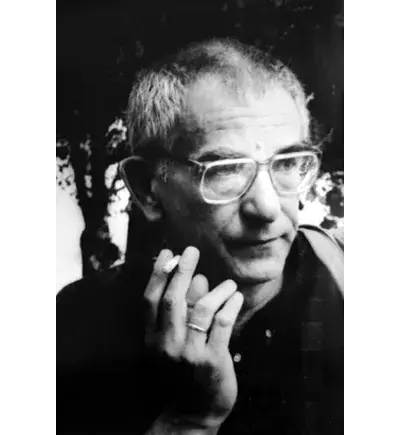
Krzysztof Kieślowski was a Polish film director and screenwriter. He is known internationally for Dekalog (1989), The Double Life of Veronique (1991), and the Three Colours trilogy (1993–1994). Kieślowski received numerous awards during his career, including the Cannes Film Festival Jury Prize (1988), FIPRESCI Prize (1988, 1991), and Prize of the Ecumenical Jury (1991); the Venice Film Festival FIPRESCI Prize (1989), Golden Lion (1993), and OCIC Award (1993); and the Berlin International Film Festival Silver Bear (1994). In 1995, he received Academy Award nominations for Best Director and Best Writing.
