John Locke Quotes
He that sells his corn in a town pressed with famine at the utmost rate he can get for it does no unjustice against the common rule of traffic, yet if he carry it away unless they will give him more than they are able, or extorts so much from their present necessity as not to leave them the means of subsistence afterwards, he offends against the common rule of charity as a man
John Locke, 1632-1704, English Political Philosopher, Quoted in Richard A. Boyd, Whig History and Lockean Political Economy
Sourced by: Eigen's Political and Historical Quotations

Lock’s view differs from modern American business ethics and law. He argues that regardless of circumstances a merchant may charge anything and that all consumers must be treated equally, which would eliminate preferred customers or even automobile sales practices where prices are negotiated for most vehicles. See {616334} to see how he deals with necessities of life: as issues of charity—not economics.


This Hadith together with the Prophet’s probation on interest appears to preclude a capitalistic economic structure. However, Muslim institutions have been very creative in interpreting these admonitions. Some Muslims give this a modern interpretation which prohibits price gouging but not fair profit. Regardless, it has always been interpreted to apply only to business transactions between Muslims. Profit can be made on trading and commerce with non-Muslims, and Muslim traders have always spanned the globe.

Downing was the brother-in-law of the Governor. Many people think that the Puritans were very moral people but they were not that so much as rigid. There was no moral compunction for example against slavery as this letter shows.

“Laid up” means “saved”. “Commutable”means fungible—gold and silver can buy anything else.

This is a very interesting quotation in that right wing parties are usually opposed to any kind of Government ownership and control of business and industry. However, Fascist parties have usually wanted to commandeer business and industry for the central purposes of the dictatorial state. The French National Front Party had its roots in the WWII French Vichy Government—which was allied with the Nazis to bring Fascism and racism to France.


The industrial revolution was also creating an entirely new form and structure for international economics.
This important statement would not have been a noteworthy quote as so many have said it before, except for the fact that she was writing as a spokesperson of Nationalist China and she was the wife of the Nationalist Party leader, Chiang Kai-Shek. And the great failure of Chiang’s governance was the corruption and the excessive exploitation of the Chinese people by the wealthy. Madame Chaing, educated at Vassar College, knew just what to say to Americans and she mustered incredible support for the Nationalist cause most of which would never have been forthcoming if Americans knew the truth about the Nationalist Government. It was so corrupt, that the vast majority of the people aided the Communists in defeating Chaing, expelling him from the mainland, and relegating his government to Taiwan. Madame Chaing’s hypocrisy was legend. See {615696}.


She was then the European Commissioner for Competition


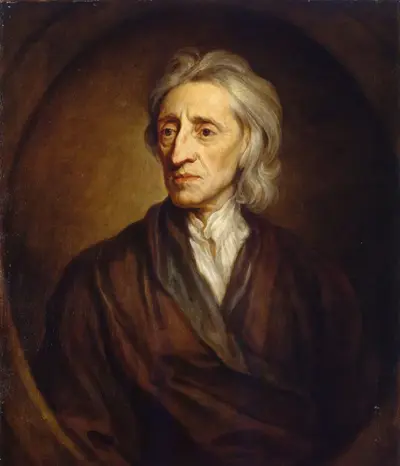
- Born: August 29, 1632
- Died: October 28, 1704
- Nationality: English
- Profession: Philosopher
John Locke FRS was an English philosopher and physician, widely regarded as one of the most influential of Enlightenment thinkers and commonly known as the "Father of Liberalism". Considered one of the first of the British empiricists, following the tradition of Sir Francis Bacon, Locke is equally important to social contract theory. His work greatly affected the development of epistemology and political philosophy. His writings influenced Voltaire and Jean-Jacques Rousseau, and many Scottish Enlightenment thinkers, as well as the American Revolutionaries. His contributions to classical republicanism and liberal theory are reflected in the United States Declaration of Independence.
