Heinrich Heine Quotes
Gun Powder makes men equal: a citizen's musket fires as well as a nobleman's.
Heine was one of the first to describe the leveling effect of the gun which was so important in developing the ethos of the American West.
Heinrich Heine, 1797-1856, German Writer & Critic, English Fragments, 13
Sourced by: Eigen's Political and Historical Quotations


While France was in the midst of a violent revolution, the American debate was on the power and prestige of the Presidency. Then Vice President John Adams was a proponent of a strong executive. Most others were not.


This gun control was not even the first in the nation. See {613055}. However it even applied to free Negroes, halfbreeds, as well as slaves. Five years later even though Virginia needed militia for the French and Indian Wars they passed a law barring even Free Blacks from serving in the Militia except “as drummers or trumpeters.” This the whites felt was critical in that most whites did not own firearms. See {613056}.


In the early 18th century, things were very unsettled between Scotland & England with the succession of both countries in question. The result was the famous union of the two countries in 1707. At the time the Scottish Parliament wanted to intimidate the English as well as to be able to fend off English troops if things did not go well. The clause has much contemporary importance because it shows what a nation would do that wanted every man armed against powers which might restrict their freedom. The American Founding Fathers at the Constitutional Convention knew about this law. They even adopted other ideas from this law--{615975}. If the Founders had wanted every man armed as some modern gun control opponents maintain, they were brilliant drafters and would doubtless have written something like this. It supports the view that what was intended was not an armed nation but a nation where the states could organize “well ordered militias” and the Second Amendment resulted.
When Tocqueville studied the United States, it was inferior to the England and the other European aristocracies in science, the arts, literature, philosophy, theology and most other intellectual fields of culture and human endeavor. He did not have the opportunity to observe the interactive, long term effects of freedom, democracy, and public education. The US would become the dominant cultural nation of the world, with the English language in far greater usage than at the height of the British Empire. American Science, literature, art developed with more and more people participating in and being educated for those areas and were free to create without the restraints of government or even cultural norms. American creativity was demonstrated by more new religions being created that than in any other nation on earth.

In modern America, there are two political views of this notion. The one held by a narrow majority of the population is Trenchard’s quotation taken literally. Their view is that there is no way to maintain liberty if there is too wide a wealth gap between the rich and the rest of the population. The second variant, held by many conservatives, limits the equality to equality of opportunity. They are loathe to take any position that says that any gap between the rich and the remainder of the citizens might be too large. They would particularly disagree with the first sentence of this quotation. Another consideration is that this quotation does not even consider what became a major problem in the American Democracy—the ability and propensity of the very rich to bribe legislators and officials and/or make “campaign contributions” to obtain favorable treatment and/or “access”.


He was arrested by the Gestapo 2 weeks later and hanged with piano wire. The upper class of Germany had no love for Adolf Hitler. They thought him gross, crude, immoral, and a danger to Germany. But Germany was such ab authoritarian society that the people who would be most independent were as intimidated and in fear as most of the non Nazi population.

At that time, ideology was not a driving political force and individual politicians often were hard to classify. For example, Humphrey was at the far left—an ultra liberal. Yet he was a staunch advocate of the right to bear arms. 50 years later there were no liberals who did not want to restrict gun ownership, And at that time, many Republicans were advocates of gun control, an unheard of situation in the 21st century beginning.

At the time English democracy was still suspect especially among the aristocracy.
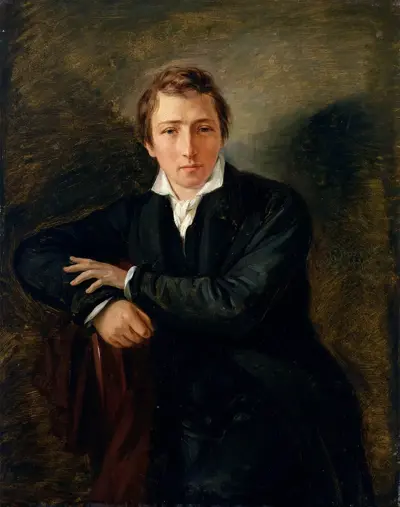
Christian Johann Heinrich Heine was a German poet, writer and literary critic. He is best known outside Germany for his early lyric poetry, which was set to music in the form of lieder (art songs) by composers such as Robert Schumann and Franz Schubert. Heine's later verse and prose are distinguished by their satirical wit and irony. He is considered part of the Young Germany movement. His radical political views led to many of his works being banned by German authorities—which, however, only added to his fame. He spent the last 25 years of his life as an expatriate in Paris.
