Muhammad Quotes
Government is a trust from God, and verily government will be at the day of resurrection a cause of inquiry, unless he who hath taken it be worthy of it and have acted justly and done good.
Muhammad, 571-632, Prophet and Founder of Islam, The Sunnah
Sourced by: Eigen's Political and Historical Quotations

Describing the Muslim concept of a just ruler.

This verse has been one of the bases of Muslim theocratic states like Iran’s claim to legitimacy. The word “govern” is sometimes translated as “judge.” In the context of the 6th century, there were no separation of powers as we know them and judging, governing and legislating were melded.

He was in many ways centuries ahead of his time with constructive ideas for any people and age. However, this was one of the exceptions. Unfortunately it became the norm for most Islamic countries even to modern times. Essentially, a bad ruler in this Islamic doctrine can be removed only if he does not follow Islam. For just being unjust or incompetent, revolution is not allowed and prayer is the only recourse. That is one of the major reasons that there have been so few Arab uprisings and revolutions although there have been many assassinations for alleged religious apostasy or insufficiency.

Fundamentalist Christians and Jews believe that the Bible is the revealed word of God. In Islam, not only is the same position taken, but it is specifically forbidden to even think about or have a personal opinion about a matter which appears in the Koran—decided by Allah and revealed to the Prophet Muhammed.
This Sunnah of the Prophet is seen by many Shi’a Muslims as a call to renounce unjust governments and leaders. This is different from the view held by most Sunni Muslims that rulers are to be obeyed even if they are not always just. See {590245}.

See Charles James Fox, John Milton, Grover Cleveland, George Mason, Henry Clay, Benjamin Disraeli and Woodrow Wilson for similar expressions of this idea.
This sura is interpreted by some Islamic fundamentalists as absolution for the killing of a non-Muslim by a Muslim. It was Allah who did it. In a greater sense, critics of Islam observe that many Muslims and Islamic nations have a double standard of responsibility for crimes. If the victims are Muslims, the normal standards of morality hold; but if a non-believer there can be no crime. Terrorism, torture, beheading, mass murder can all be done with a clean conscience if a Muslim takes this interpretation of this sura. Many Muslims however take an opposite point of view. These people do not have the concept of fatalism and lack of free will that others believe. There is a parallel to this problem in Judeo Christian countries although it is less common statistically. But the murder of physicians who perform abortions, and the Jewish radical fundamentalist who killed innocent Arabs at worship are examples of people who viewed themselves as instruments of God in their heinous activities.
The ruler will be interrogated not only about his own unjust deeds but also about those of his staff
Some otherwise excellent leader, with a misplaced concept of loyalty to their staff, have been greatly harmed by not attending to this principle. Grant’s presidency and legacy was almost totally ruined by the behavior of his subordinates and appointee, with the President unwilling to fire them.


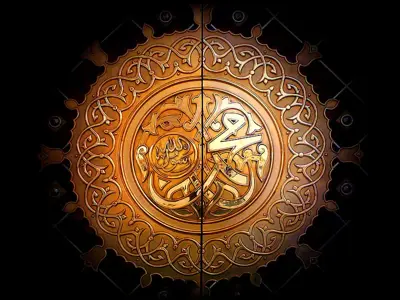
Muhammad was an Arab religious, social, and political leader and the founder of Islam. According to Islamic doctrine, he was a prophet, sent to preach and confirm the monotheistic teachings of Adam, Abraham, Moses, Jesus, and other prophets. He is believed to be the final prophet of God in all the main branches of Islam, though some modern denominations diverge from this belief. Muhammad united Arabia into a single Muslim polity, with the Quran as well as his teachings and practices forming the basis of Islamic religious belief.
