Queen Victoria Quotes
Gordon is in trouble. For the honor of the government and the nation you must try and save him.
The reference was to General Charles George “Chinese” Gordon, who had been sent alone to put down and insurrection in the Sudan as the Prime Minister did not want to spend the money to send a proper army. Gordon took command of the few troops and was soon bottled up and besieged. By the time the army arrived at the behest of the Queen, the English had been captured and Gordon killed. It was a national scandal.
Victoria Alexandrina, 1819-1901, Queen of Great Britain and Ireland & Empress of India, Communique to Prime Minister Gladstone
Sourced by: Eigen's Political and Historical Quotations

The Gladstone government delayes and the force did not arrive on time. The town fell to the Madhi’s forces. Gordon was killed.


1st Earl Lloyd-George of Dwyfor. He was the Chancellor of the Exchequer at the time, but gave the English response to the Morocco crisis.

Most Canadians supported the English despite the letter.

Centuries later leaders have studied this speech and the actions taken by Elizabeth as the epitome of model leadership and morale building at a time of crisis. What made the event more dramatic were two monarchial norms of the time understood by all the citizens. Monarchs did not open themselves to the risk of very close proximity to their armies with only a handful of retainers. A dissident military commander could kill or capture the monarch as most soldiers had little loyalty to anyone but the commander who paid them. Second, monarchs usually abandoned battlefields where the outcome was uncertain and if not present certainly stayed away. Elizabeth in breaking both these norms was taking obvious risks with her own life (as a women for whom it was even more unexpected) and welfare to share the immediate fate of her subjects. It explains why an absolute monarch was extremely popular with her subjects—great leadership.

The House was debating on the peace treaty with the United States. Pitt, then was Chancellor of the Exchequer. He knew the government would lose the vote and he would have to resign.


The Somnauth Temple was one of the holiest of Hindu shrines in India. It had been attacked, looted, and destroyed several times since its erection before the birth of Christ. A Northern Warlord Ruler had raided the temple and stolen the spectacular gates at the tomb. When the British Indian Army of Indians led by British officers and NCOs, conquered the Warlord area, Lord Ellenborough had the huge gates removed and returned to the Somnauth Temple issuing this proclamation which he arranged to have approved by Queen Victoria and have Parliament vote to return the gates. It was a brilliant historical instance of symbols having enormous political effect. Hindus throughout India, most of whom had forgotten about the stolen temple gates, had the British to thank for righting one of the great wrongs of Hindu history.


In the letter, he was refusing a donation of five hundred guineas for his efforts in Parliament on behalf of the persecuted Roman Catholics of Ireland. See related quotes.


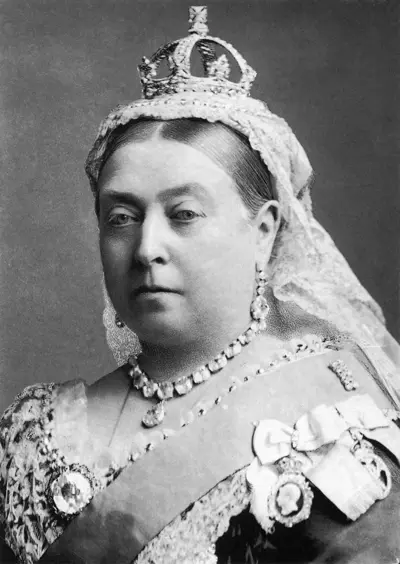
Victoria was Queen of the United Kingdom of Great Britain and Ireland from 20 June 1837 until her death in 1901. Known as the Victorian era, her reign of 63 years and seven months was the longest of any British monarch until surpassed by that of Elizabeth II. It was a period of industrial, political, scientific, and military change within the United Kingdom, and was marked by a great expansion of the British Empire. In 1876, Parliament voted to grant her the additional title of Empress of India.
