Lyndon B. Johnson Quotes
Gerald Ford's economics is the worst thing that's happened to this country since pantyhose ruined finger-fucking.
Johnson could be incredibly gross and earthy. However, as undignified as his analogy was, everyone understood his insult to Jerry Ford’s economic ideas. Ford was one of the House Republican leaders at the time.
Lyndon Baines Johnson, 1908-1973, 36th President of the United States (Democrat, TX), Quoted in M. Miller, Lyndon B.: An Oral Biography, Putnam, 1980
Sourced by: Eigen's Political and Historical Quotations


The speech was actually drafted by Peter Jay, his son-in-law and a journalist. The leader of the left-wing Labour party, to the surprise and anger of many of the party stalwarts, was repudiating Keynesianism which had been basic to the party for years. This appears to be the first specific statement that a government cannot spend its way out of a recession. Conservatives have used it ever since in countries throughout the world. The truth of the Keynes proscription is in constant modern economic and political debate with no resolution likely soon.


Paul wanted to abolish the Federal Reserve Board. This is a political viewpoint that goes back to the Founding Fathers debates about a national bank. Andrew Jackson terminated the national bank and later the concept of the Federal Reserve Bank took its place.

She was refuting the claim of many economic conservatives that cutting taxes will always produce economic growth. Actually, in many cases tax cuts do have that effect, but as the counter-example shows, not always and not under all conditions. The Kennedy tax cuts, for example, did produce economic growth.

His argument was that the government role in the economy was to maintain full employment and to hold inflation in check. His argument was that if these to things should be done whatever the government did to maintain that was fine. Today, we argue about every aspect of the economy and many believe that full employment and inflation control are contradictory. He would have both and make the other things give. No government has ever yet tried his approach though he was very popular amongst libertarian and free market economists.


Reference to the British Economist John Maynard Keynes who advocated government action to manage the economy.


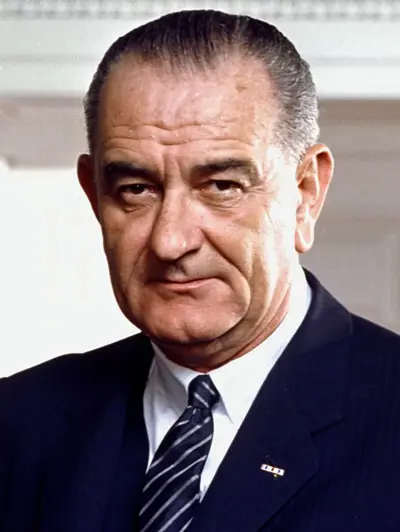
Lyndon Baines Johnson, often referred to by his initials LBJ, was the 36th president of the United States, in office from 1963 to 1969. He served as the 37th vice president from 1961 to 1963 and assumed the presidency following the assassination of President John F. Kennedy. A Democrat from Texas, Johnson was also a United States representative and later majority leader in the United States Senate. Johnson is one of only four people to have served, at various times, in all four federal elected positions.
