Douglas Haig Quotes
Further, a defensive policy involves the loss of the initiative, with all the consequent disadvantages to the defender.
Haig, Douglas. Sir Douglas Haig's Despatches (December 1915-April 1919). Edited by J. H. Boraston, J. M. Dent & Sons, 1919, p. 320.


He was a strong believer in surprise attack and preemption.


Referring to the Joint Committee for the Conduct of the War—the unit of Congress that scrutinized and often tried to micro-mange Abraham Lincoln's efforts:


These tactics were revolutionary in China and the rest of the world. They were unexpected and were very effective. The non communists however were corrupt, exploitative, and divided. The communist revolution in China might well have not succeeded had the capitalist forces not been so corrupt and badly led.


His aggressive tactics which had served him so well in the West got his army into trouble at the Second Battle of Bull Run, where he was out maneuvered by Stonewall Jackson and Robert E. Lee. He was sent back to the West.

If there is a group from whom a constant supply of volunteer suicide bombers is drawn, and who honestly believe that death while fighting for Islam is desirable, then deterrence will not be an effective strategy. This is a very hard reality for us to face because the vast majority of our historical experience has been with people who were moved by deterrence techniques.
China had a similar policy with each side wanting to establish more of a precedent for its ownership of the islands. Military flyovers, landing parties raising national flags by both countries triggered counter measures and the likelihood of casualties and even death to some soldiers. Both sides seemed willing to risk the lives of their troops as long as the conflict could be contained thereafter. But sometimes it cannot be.

The “adversary” was Pakistan, which was frequently sending military and terrorist attacks into Kashmire much if which has been disputed by Pakistan ever since the Partition of India in 1949. India had a very disciplined and well led military and like most sophisticated military powers did not immediately retaliate for military incursions despite the public pressure to do so. Instead they gave themselves time to plan and organize the logistics for a series of surgical strikes at the terrorist and/or military concentrations Pakistan had deployed close to the border which they launched several days later.


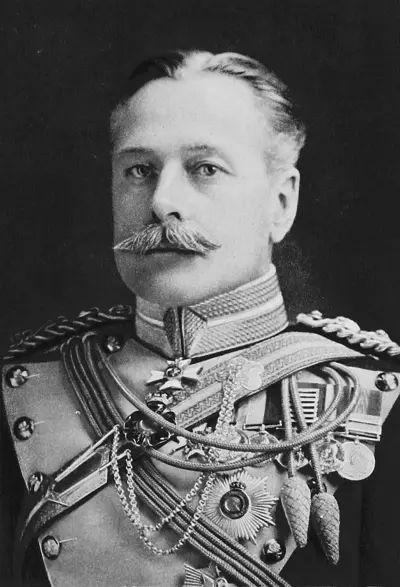
Field Marshal Douglas Haig, 1st Earl Haig, KT, GCB, OM, GCVO, KCIE was a senior officer of the British Army. During the First World War, he commanded the British Expeditionary Force (BEF) on the Western Front from late 1915 until the end of the war. He was commander during the Battle of the Somme, the Battle of Arras, the Third Battle of Ypres (Passchendaele), the German Spring Offensive, and the final Hundred Days Offensive.
