Werner Heisenberg Quotes
For Germany, the war was like an end game in chess in which she possessed one castle less than her adversary. The loss of the war was as certain as the loss of an end game under these conditions.
Heisenberg, Werner. "Research in Germany on the Technical Application of Atomic Energy." Nature, vol. 160, no. 4059, 1947, p. 211.

This illustrates one of the reasons that the Israeli Arab conflict has been unsolvable over the years. A thousand years ago, the Arabs were a leading intellectual and military power in the world. The rest of the world has moved ahead and they have actually retrogressed. So the Arabs seek dignity which is very elusive. They have never wanted to negotiate terms with Israel when they have been weak and feel defeated. So the pattern has been that they feel they cannot negotiate for justice as they are too week. So periodically they attack Israel which has always defeated them and hoped that after the Arab defeat, permanent negotiations for peace could take place. But the Arabs were feeling too weak. So they just repeated all their extreme demands. After a few years, they would try another attack, lose again and the cycle would repeat. The Israelis fear that if the Arabs every won a war, the Arab moderates might be willing to reasonably negotiate, the extremists would want to continue the fighting and “drive the Israelis into the sea” as they have so often threatened.


The Kaiser, facing a revolution, instructed Groener to use the army to put down the revolution. The Kaiser had to abdicate and the German Republic was born, soon to fall to the Nazis.

When Confederate General Simon Bolivar Buckner suggested a negotiated surrender of Fort Donaldson, which protected Nashville, TN, his West Point classmate and friend wired back:


Two days later Lee surrendered at Richmond, and the Civil War was over. On April 14, Lincoln was assassinated. He died the next day.

The CIA and others had known that the Vietnam War was not winnable, yet the CIA Management and the Defense Department were stating the contrary. Gates was then an analyst for the CIA and it was his first job out of college. There was a rationale for the politicians and military leaders to lie about prospects in Vietnam. If we could not win, we wanted to negotiate a settlement on as good terms as we could get. However, if Ho Chi Min and the North Vietnamese knew that we did not think that we could win, they would have no incentive to concede on any points or compromise at all. To be successful in the negotiations, we had to persuade the Vietnamese that we thought we could win and would keep up the fighting and bombing unless they would concede some things. Unfortunately, by the time that we started negotiations, it was too late to be very successful in negotiations. All the parties to the negotiations at that point realized that we could not win. The only people who thought the contrary were a large block of American patriots who had been deceived by the politicians and the military leadership.


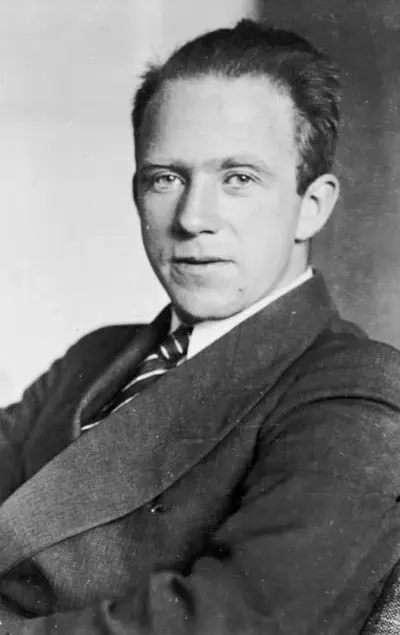
Werner Karl Heisenberg was a German theoretical physicist and one of the key pioneers of quantum mechanics. He published his work in 1925 in a breakthrough paper. In the subsequent series of papers with Max Born and Pascual Jordan, during the same year, this matrix formulation of quantum mechanics was substantially elaborated. He is known for the uncertainty principle, which he published in 1927. Heisenberg was awarded the 1932 Nobel Prize in Physics "for the creation of quantum mechanics".
