William Smyth Quotes
Freedom must be enjoyed and men must not lose their nature, and be driven by their keepers like the beasts of the field, but neither must they be so enamored of self-rule as to admit of no paramount directors and governors. The public rights and privileges for which they should contend are not the power of self-rule, nor even the immediate and palpable direction of the measures of their government, the great aim and boast of purely republican forma; but the privileges of peaceful criticism on their government, the power of subsequent censure, the acknowledgment in the rulers of a delegated, rather than an original authority, and a reference of their measures to the interest of the community. These are the points for which they should contend, the points which, as a government is more or less perfect, are more or less accomplished and secured.
William Smyth, 1765–1849, English Historian, Lectures on Modern History, published 1854
Sourced by: Eigen's Political and Historical Quotations


Cochrane became the Admiral in Chief of 2 Different South American Nations—Peru and Brazil—fighting for their independence. Incredibly enough, he was able to form idealistic freedom fighters with no naval experience into navies which defeated both the Spanish and Portuguese fleets at a time when those countries had world class navies. His achievements on behalf of the South Americans are often regarded as the most remarkable naval achievements in history.


He had been asked by other delegates what Franklin thought they had just created.


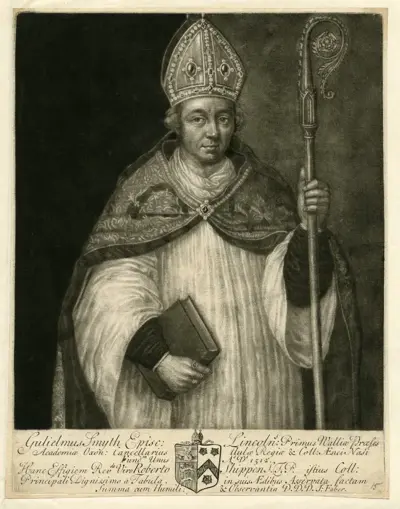
William Smyth (or Smith) was Bishop of Coventry and Lichfield from 1493 to 1496 and then Bishop of Lincoln until his death. He held political offices, the most important being Lord President of the Council of Wales and the Marches. He became very wealthy and was a benefactor of a number of institutions. He was a co-founder of Brasenose College, Oxford and endowed a grammar school in the village of his birth in Lancashire.
