Ralph Waldo Emerson Quotes
Free trade: certainly the interest of nations, but by no means the interest of certain towns and districts, which tariff feeds fat; and the eager interest of the few overpowers the apathetic general conviction of the many.
This summary of the problem of trying to politically “sell” free trade is as good as anyone has ever said it in America. And the problem and argument has not changed since. Free trade is good for most, but really harms some in specific situations. The beneficiaries often do not realize who they are or how they have benefitted, but those who are harmed generally know exactly how and what the damages are.
Ralph Waldo Emerson, 1803-1882, Poet & Essayist, Poem: Voluntaries, “American Civilization”, The Atlantic Monthly, April 1862
Sourced by: Eigen's Political and Historical Quotations


Whitaker was right bet at that time his advice was not heeded. When Ireland late in the 20th century finally acted on his advice and eliminated almost all of their protectionism, the economy thrived and not only did the Irish emigration stop, but people began to immigrate to Ireland for the economic opportunity.

In England at the time, the liberals were for free trade and the conservatives against. In both England and America both liberals and conservatives have flip flopped their roles in foreign trade several times. Free trade is a two edged sword; it aids domestic growth, employment and prosperity in some cases and hurts them on others. And there are always winners and losers for each example of free trade within any country. The result is no long term commitment and much flip flopping.


Note that in the beginning of the 20th century, the Democrats were the free traders opposing protectionism while the Republicans advocated strong protectionism to protect American companies. By the end of the 20th Century, both parties had flip flopped and taken the other’s position.

At that period of American History, the Republicans supported high tariffs and protectionism for American companies and it was the Democrats who were the advocates of free trade. Later each of the parties would flip flop their positions and then say that they were advocating their traditional principles.


Referring to NAFTA, CAFTA and other international trade agreements


During Theodore Roosevelt's administration there was a movement for tariff reform. The Speaker advised against any change, and the President finally accepted his view:


Democratic politicians of that era mostly opposed free trade because the experience ever since NAFTA showed that many manufacturing jobs were lost in the United States although many new jobs were created but few of these were good paying jobs that Americans with limited educations could perform as they were able to with manufacturing jobs. And during that period, the requirements for fair trade and foreign workers rights have been very poorly enforced. The Democrats split between those who thought that new trade treaties could be negotiated and enforced, correcting the problems of the past, and those who did not believe that such proper free trade was very likely.

5th Earl of Rosebery. With free trade, there are winners and losers. The advocates observe that overall, there is a great benefit to most countries engaging in free trade, but some sectors of the economy, and some areas and groups of people fare poorly.


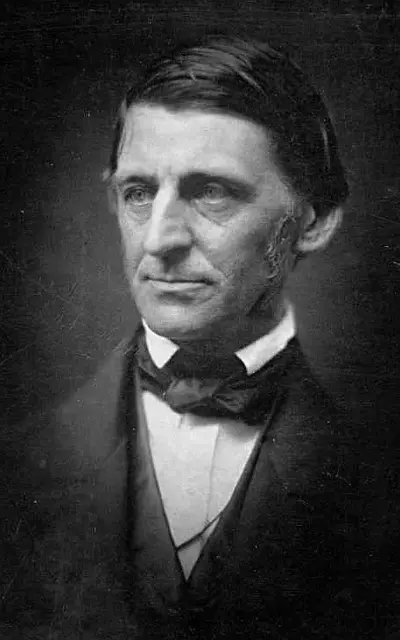
Ralph Waldo Emerson, who went by his middle name Waldo, was an American essayist, lecturer, philosopher, abolitionist and poet who led the transcendentalist movement of the mid-19th century. He was seen as a champion of individualism and a prescient critic of the countervailing pressures of society, and he disseminated his thoughts through dozens of published essays and more than 1,500 public lectures across the United States.
