Aristotle Quotes
For those who possess and can wield arms are in a position to decide whether the constitution is to continue or not
Aristotle. The Politics. Translated by T. A. Sinclair, Penguin Books, 1962, p. 273.


This was the case where the Supreme Court reversed its earlier opinion and declared the Income Tax Unconstitutional.

This view tends to be contrary to those gun control opponents who believe that dictatorial rulers always want to disarm a population. Historically that has occurred but more often, dictators arm their populations to accomplish their aggressive aims.


The version of the Constitution they were debating did not include the Bill of Rights.


She was a nondescript minor functionary in a Tea Party Active Southern County, and her hatred of the Black president was hardly noteworthy. What makes this an important quotation is that it was frequently shown to foreigners who really did not understand the great degree of freedom of speech. Here a public official being paid by the government, not only calls for the removal of a sitting president, but also openly asked the army to rebel against their commander in chief. She was not punished, nor even arrested or tried. She was not even dismissed from her elected government job. That was up to the voters in the next election. There likely is no other country in the world where that can happen.


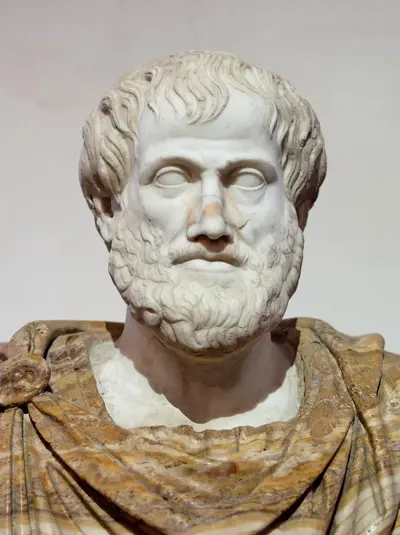
Aristotle (/ærɪˈstɒtəl/; Greek: Ἀριστοτέλης Aristotélēs, pronounced [aristotélɛːs]; 384–322 BC) was a Greek philosopher and polymath during the Classical period in Ancient Greece. Taught by Plato, he was the founder of the Lyceum, the Peripatetic school of philosophy, and the Aristotelian tradition. His writings cover many subjects including physics, biology, zoology, metaphysics, logic, ethics, aesthetics, poetry, theatre, music, rhetoric, psychology, linguistics, economics, politics, meteorology, geology and government. Aristotle provided a complex synthesis of the various philosophies existing prior to him. It was above all from his teachings that the West inherited its intellectual lexicon, as well as problems and methods of inquiry. As a result, his philosophy has exerted a unique influence on almost every form of knowledge in the West and it continues to be a subject of contemporary philosophical discussion.
