Vilfredo Pareto Quotes
For the modern criminal it is a great good fortune to be able to count somewhere among his ancestry or other relations a criminal, a lunatic, or just a mere drunkard, for in a court of law that will win him a lighter penalty or, not seldom, an acquittal. Things have come to such a pass that there is hardly a criminal case nowadays where that sort of defense is not put forward.
This argument which has been a standard American conservative one in the 21st century actually had its origins a century earlier in Europe.
Vilfredo Pareto, 1848-1923, Italian sociologist, economist and philosopher, Les Systemes Socialistes, 1902
Sourced by: Eigen's Political and Historical Quotations


This clause is a real puzzlement to non-Muslims throughout the world. What it means is that a person is allowed to murder certain other people—the “blood” was permitted. These include homosexuals, heretics. blasphemers, and those individuals who have had Fatwas—Islamic legal opinions—calling for their death as enemies of Islam. So if a Muslim cleric issues a fatwa calling for the death of someone, anyone who can kill the person will be exonerated. Under Sharia, a Muslim who murders his own daughter or sister because she violated the sexual taboos of Islam, is exonerated because in this case the blood of the victim was permitted. It is the same for murdering a homosexual, or someone who converts from Islam to Christianity.


Article 17 of the Egyptian criminal code allows judges to reduce or even suspend sentences after a conviction. That has been used to effectively exonerate murders where “honor killing”—the killing of a woman or man whose alleged behavior was contradictory to existing mores, thus bringing dishonor upon the family. Women who were suspected of adultery or even dressing immodestly were murdered by husbands, brothers or fathers without any serious criminal punishment. Some have called for repeal of Article 17.


In American law, there must be a criminal intent to prove guilt of a crime. If someone is coerced, the absence of criminal intent would usually exonerate him.
In some societies, drunkenness is an extenuating circumstance which diminishes moral and legal guilt. In others it is not. In the United States is sometimes is and sometimes is not. Generally, a drunk person will not be relieved of all guilt but often the charge will be lessened—for example from murder to manslaughter. Aristotle suggested, and in some Islamic countries it is observed that the person who commits a crime while drunk is punished twice—once for the crime and once for being drunk.


Adopted by the original Edinburgh Review Magazine as its motto.
This is the classic argument given by those who would deny a defendant the Constitutional protection against self-incrimination. The belief that an innocent man has nothing to fear from the police is refuted by the many cases of innocent men being convicted by evidence they have given in the belief that they were innocent, and served long jail sentences only to later be proved by DNA evidence that they could not possibly have been guilty. Since Nott’s day, society has not only found many cases where honest error was made by the police or prosecutors, but many where there was venal prosecutorial misconduct and defendants were jailed even though the authorities were aware of evidence of innocence and kept it secret. There have been a number of these cases where a defendant was on death row and about to be executed when it was found he was innocent. Probably there have been men wrongly executed. See {629444} for a probable example.


This is an amazingly intellectually advanced quotation. Herman Helcher, was a former pupil of hers who had become mentally deranged and tried to murder her and left her permanently injured. She not only argued against the jailing of a mentally ill person, but she recognized mental illness for what it is—a disease of the brain. This concept was not appreciated by most American politicians or constituents even into the 21st century.

Selling alcohol and running saloons were against the law then in Kansas but there was no effort to enforce it anywhere in Kansas. Carrie Nation went into saloons and literally smashed the classes, signs, mirrors and furniture with an ax.

Before and while he was prime minister, he was the owner of most of the television and other media in Italy and one of the wealthiest men in that country. He was, like many politicians the world over, a womanizer, but he had a penchant for underage girls and was found guilty of not only having sex with them but sometimes paying them. He had also been convicted of tax evasion. He felt he was persecuted because in Italy, almost all the rich businessmen cheat on their taxes—it’s a national sport, and older men have been sexually exploiting young girls for centuries. So he argues that if he were not a visible conservative politician, he never would have been prosecuted for these “crimes” which were very common in Italy. He was extremely conservative on the Italian political spectrum, and most Italians were to his left, and that is true for the judges and magistrates in Italy, so there was no way that he could interact with judges / magistrates who were not more left wing than he.
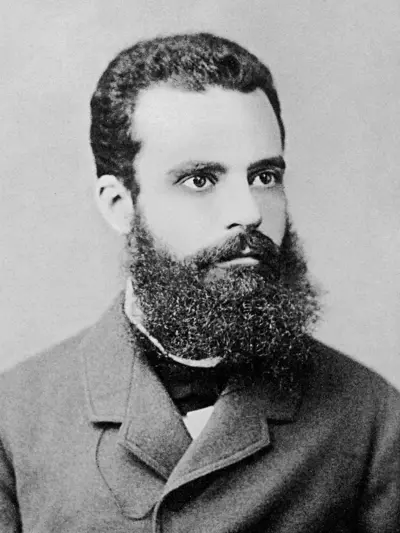
Vilfredo Federico Damaso Pareto was an Italian civil engineer, sociologist, economist, political scientist, and philosopher. He made several important contributions to economics, particularly in the study of income distribution and in the analysis of individuals' choices. He was also responsible for popularising the use of the term "elite" in social analysis.
