Jean-Jacques Burlamaqui Quotes
Finally, with regard to actions manifestly bad or criminal, to which a person is forced through fear of some great evil, and especially death; we must lay down as a general rule, that the unhappy circumstances, under which a person labors, may indeed diminish the crime of a man unequal to this trial, who commits a bad action in spite of himself, and against his own inward conviction, yet the action remains intrinsically vicious, and worthy of censure; wherefore it may be, and actually is imputed, unless the exception of necessity can be alleged in the person's favor.
In American law, there must be a criminal intent to prove guilt of a crime. If someone is coerced, the absence of criminal intent would usually exonerate him.
Jean-Jacques Burlamaqui, 1694–1750, Swiss Counsel of State & Political Philosopher, The Principles of Natural Law, Chapter XI, 1748
Sourced by: Eigen's Political and Historical Quotations


In some societies, drunkenness is an extenuating circumstance which diminishes moral and legal guilt. In others it is not. In the United States is sometimes is and sometimes is not. Generally, a drunk person will not be relieved of all guilt but often the charge will be lessened—for example from murder to manslaughter. Aristotle suggested, and in some Islamic countries it is observed that the person who commits a crime while drunk is punished twice—once for the crime and once for being drunk.


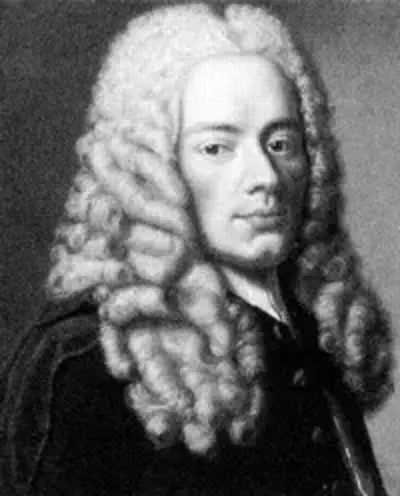
Jean-Jacques Burlamaqui was a Genevan legal and political theorist who popularised a number of ideas propounded by other thinkers.
