Mahatma Gandhi Quotes
For my own part, I do not want the freedom of India if it means extinction of English or the disappearance of Englishmen.
Gandhi, Mahatma. Young India. 12 Jan. 1928.


He persuaded many other rulers to join the Indian Union when India became Independent.
In early America large numbers of whites who had been captured by Indians would refuse to leave their new families even when they had the opportunity to do so. J. Hector St. John

Kenya and a number of other countries of the world were made up of regions and tribes who spoke many languages, Kenya, India and many others chose English and most people speak their tribal or regional language and English. In some countries French was chosen. Typically, the language selected for unity was the language of the colonizers of the area.
As early as 1933, 14 years before Indian independence, there was a movement for a separate Muslim nation within India. Ironically, Hindu India was never a nation in any sense of the word, but was a series of independent principalities much like Italy before its unification. However, with the Muslim conquest of the various Indian states, there was a central authority, ruler, and nation for the first time. Later the Muslims had to argue that India was not a country when it was they who had made it such. When the Muslim Emperors were in power, they argued that India was one country under their authority. But when they lost power, the Muslims argued the other side of the issue.


Bourne was one of the first writers with a national audience to question the classic but never real “melting pot” theory of immigration and suggest the “salad” model though he never used the term.


Some in the military and state department were distressed by this writing. England was our major WWII ally. We were fighting, side by side with soldiers of many of the colonies of the British Empire. Some nationalists in India were urging non-cooperation in the Allied war effort. Most American leaders adopted the policy of holding our differences with our allies (England, China & Russia) until after the war was won. However, Mrs. Roosevelt, was more outspoken than most other public officials.


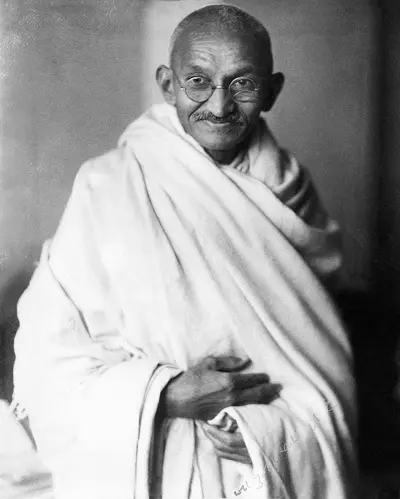
Mohandas Karamchand Gandhi was an Indian lawyer, anti-colonial nationalist, and political ethicist, who employed nonviolent resistance to lead the successful campaign for India's independence from British rule, and in turn inspired movements for civil rights and freedom across the world. The honorific Mahātmā (Sanskrit: "great-souled", "venerable"), first applied to him in 1914 in South Africa, is now used throughout the world.
