H. L. Mencken Quotes
For it is an absurdity to call a country civilized in which a decent and industrious man, laboriously mastering a trade which is valuble and necessary to the common weal, has no assurance that it will sustain him while he stands ready to practice it, or keep him out of the poorhouse when illness or age makes him idle.
Mencken, H. L. Minority Report: H. L. Mencken's Notebooks. Alfred A. Knopf, 1956.


The “bread box” was a metal box used in most homes to keep bread fresh before refrigerators were so large and prevalent.


The argument here is that since the poor working class wages are so low, that they cannot save for an emergency, therefore the society must provide for welfare for those who might otherwise starve.


He later claimed that he misspoke. He was particularly damaged by this statement as he was personally very wealthy, was supported by most large corporations, and had been accused of only worrying about the rich and business.

This was written in the early years of the Great Depression. Over 25 percent of Americans were out of world. The stock market had crashed and many banks failed wiping out family savings where there was any. Social Security, Bank and Stock Market Regulations were not yet passed. The New Deal government was just starting creating jobs, but there was great concern that the capitalistic system had failed. Thomas and other critics were right that the U. S. Government had not before used its machinery for “ease and security of living”; they called for the adoption of state socialism. President Roosevelt however instead reformed American capitalism by adding substantial regulation, provided direct relief to the unemployed poor, stimulated the economy, created Social Security, Federal Deposit Bank Insurance, unemployment insurance and initiated massive public works programs. It took almost a decade but American Capitalism was saved and transformed to the greatest industrial output and standard of living increase the world had known. It was not until 2008 that the capitalistic American economy melted down again. Regulation of corporations had diminished. The banks failed and had to be bailed out again but as the result of Social Security, Unemployment Insurance and other programs there was some cushioning of the effect of the Great Recession. The middle and lower class insecurity was back along with the wealthy taking a much larger proportion of the national wealth. The big difference was that few called for an end to capitalism and the political debate was on how best to fix the weaknesses of capitalism. Even most socialists around the world had built their Social Democracies around a capitalistic economic structure.

Communications were quite primitive and out of desperation many jobless men would just walk the main road to the next community in hopes of finding work there.


The 1934 midterm elections had provided the Roosevelt administration with a Congress eager for reform.


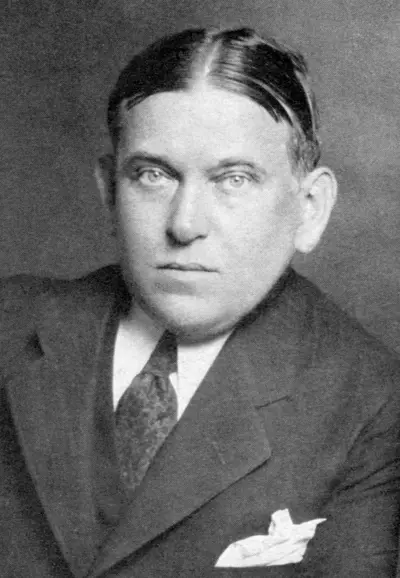
Henry Louis Mencken was an American journalist, essayist, satirist, cultural critic, and scholar of American English. He commented widely on the social scene, literature, music, prominent politicians, and contemporary movements. His satirical reporting on the Scopes Trial, which he dubbed the "Monkey Trial," also gained him attention.
