Mustafa Kemal Ataturk Quotes
Following the military triumph we accomplished by bayonets, weapons and blood, we shall strive to win victories in such fields as culture, scholarship, science, and economics, … the enduring benefits of victories depend only on the existence of an army of education.
Kemal Ataturk, 1881-1938, 1st President and founder of the Turkish Republic, Quoted in http://www.gazi.edu.tr, December 12, 2003
Sourced by: Eigen's Political and Historical Quotations


Akhito, then a very young man, had been under the tutelage of imperial and military men chosen for the task. Their racism and conviction of Japanese innate superiority persists to this day among many of the Japanese right.


Greek invaders were marching on Istanbul


By symbols be was not only referring to metaphorical symbols of letters, words, digrams, numbers and formulas. The vast majority of all human knowledge is spread by symbols of one kind or another. The must sophisticated devices or weapons all boil down to sets of words, formulas and diagrams. Art is almost all symbolic.


Note the belief that the author has the belief that over time homogeneity is important in a state, whereas the most successful modern states have been ones that are diverse—i.e. America, Britain, China, France. There have been some small successful states like Norway that are homogeneous, but large states need the heterogeneity.


Napoleon recognized that technology and science were major factors in innovation and economic development and that mathematics was necessary for that and for economics, and therefore placed a great deal of emphasis on mathematics education. He was a fairly competent mathematically himself having been an artillery officer early in his career.


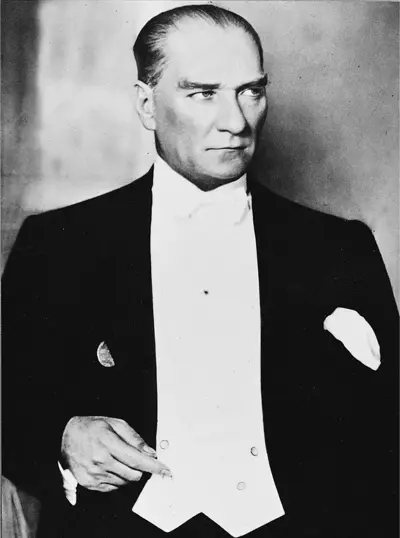
Kemal Atatürk was a Turkish field marshal, revolutionary statesman, author, and the founding father of the Republic of Turkey, serving as its first president from 1923 until his death in 1938. He undertook sweeping progressive reforms, which modernized Turkey into a secular, industrial nation. Ideologically a secularist and nationalist, his policies and theories became known as Kemalism. Due to his military and political accomplishments, Atatürk is regarded as one of the most important political leaders of the 20th century.
