Klaus Fuchs Quotes
Finally Germany's attack on Russia seemed to confirm that Russia was not shirking and was prepared to carry out a foreign policy with the risk of war with Germany.
Fuchs, Klaus. "Statement of Klaus Fuchs, 27 January 1950." Klaus Fuchs, Atom Spy, by Robert Chadwell Williams, Harvard University Press, 1987, pp. 183-187.


There was some fear in the North that the shots fired by the Southern rebels, might encourage one or more of the European Powers to start a war with the United States. And if the Rebellion turned into a full scale Civil War, the South would surely encourage such acts be promising trade concessions in the export of Southern cotton. Seward’s confident and bellicose statement distressed some Union colleagues who feared that Seward might anger and provoke one of more of the machismo and nationalistic European Powers. However, if Seward was bluffing, the bluff worked. No country encroached on American interests during the Civil War. If he was not bluffing, he certainly, along with many others, understated the difficulty that the North would have putting down the Southern rebellion.

American official foreign policy had been officially isolationist—to not get involved in the squabbles and fights of other nations. Angell however pointed out that even before WWII, America had formally been involved in 6 foreign wars and used military incursions on foreign soil on almost 100 occasions.


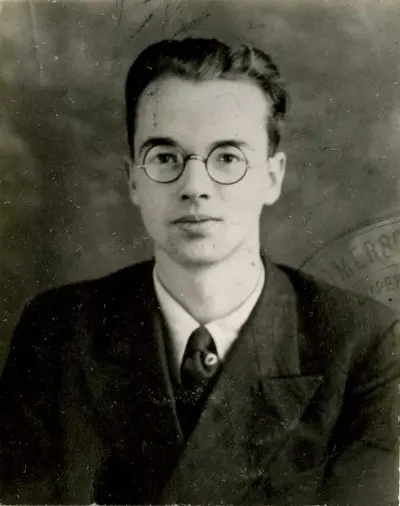
Klaus Emil Julius Fuchs was a German theoretical physicist and atomic spy who supplied information from the American, British, and Canadian Manhattan Project to the Soviet Union during and shortly after World War II. While at the Los Alamos National Laboratory, Fuchs was responsible for many significant theoretical calculations relating to the first nuclear weapons and, later, early models of the hydrogen bomb. After his conviction in 1950, he served nine years in prison in the United Kingdom and then moved to East Germany where he resumed his career as a physicist and scientific leader.
