Javed Akhtar Quotes
Faiz Ahmed Faiz was like a leading star of the progressive writers who emerged in undivided India.
Akhtar, Javed. "Javed Akhtar on Faiz Ahmed Faiz." The Indian Express, 12 Feb. 2011.


This is another example of how President Roosevelt conducted his own international diplomacy independent of his own State Department. At the time, the U. S. State Department would not have any contact with Nehru who was in and out of British Indian jails for his anti-Colonial agitating. Roosevelt, however was a great admirer of Nehru and the Congress party and the commitment to democracy, freedom of religion, speech and the press and civil rights. Roosevelt and the American military strategic leaders were beginning to worry that China, even with help, would not be able to hold off the Japanese aggression, and India would become a frontier for the Allied war effort. The President realized that Nehru and his Congress Party were pressuring England for independence and extreme Indian nationalists were advocating non-support of the British military effort and strikes and protests to bog down the British army dealing with them instead of fighting the Japanese in Burma and elsewhere. There were a large number of Indian Brigades fighting for the British and if the Indian military volunteers were to be discouraged or boycotted, the allied war effort would suffer. So the President's style was to personally see what he could contribute over and above (and often to the distress of) his agencies established to do the job.

The Partition was accompanied by over 2 million murdered Indians as India was divided into a smaller India with almost all the Hindus and Sikhs and a slight majority of the Muslims and Pakistan with all Muslims who made that choice. Pakistan has been trying to de stabilize the area ever since to gain control of more land and became a theocracy and military dictatorship—sometimes de facto and sometimes de juro.

Bath parties developed in several Arab countries: In Iraq and Syria they actually came to power. However, they were soon at each other’s throats and never became the unifying force in the Arab world that they had hoped to become at their founding. The quotation turned out to be a hope and a dream but not a realistic assessment of reality.


As early as 1933, 14 years before Indian independence, there was a movement for a separate Muslim nation within India. Ironically, Hindu India was never a nation in any sense of the word, but was a series of independent principalities much like Italy before its unification. However, with the Muslim conquest of the various Indian states, there was a central authority, ruler, and nation for the first time. Later the Muslims had to argue that India was not a country when it was they who had made it such. When the Muslim Emperors were in power, they argued that India was one country under their authority. But when they lost power, the Muslims argued the other side of the issue.

That is exactly what happened. However it would not happen until after the Second World War.


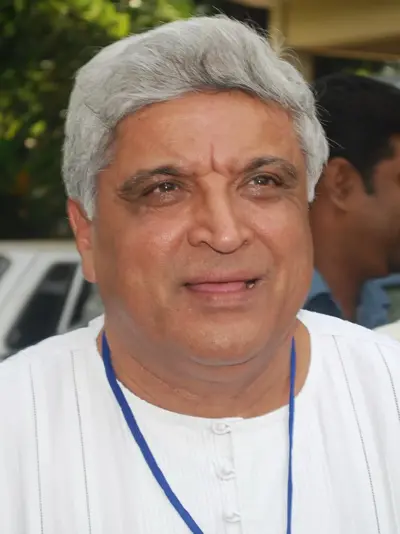
Javed Akhtar is an Indian political activist, poet, lyricist and screenwriter. He is originally from the Gwalior area. He is a recipient of the Padma Shri (1999), Padma Bhushan (2007), the Sahitya Akademi Award as well as five National Film Awards. In the early part of his career, he was a screenplay writer, creating films such as Deewar, Zanjeer and Sholay. Later, he left screenplay-writing and became a lyricist and social-political activist . He also remained a member of Rajya Sabha. In 2020, he received the Richard Dawkins Award for his contribution to secularism, free thinking, for critical thinking, holding religious dogma up to scrutiny, advancing human progress and humanist values. Javed Akhtar was chosen as a recipient for the Richard Dawkins Award for being "the bright light for reason, freethought, and atheism in a dark time".
