Muhammad Ali Jinnah Quotes
Any idea of a united India could never have worked, and in my judgment, it would have led us to terrific disaster. Maybe that view is correct; maybe it is not - that remains to be seen.
Jinnah, Muhammad Ali. Quaid-i-Azam Mohammad Ali Jinnah: Speeches and Statements as Governor-General of Pakistan, 1947-1948. Government of Pakistan, Ministry of Information and Broadcasting, 1989, p. 46.


The Partition was accompanied by over 2 million murdered Indians as India was divided into a smaller India with almost all the Hindus and Sikhs and a slight majority of the Muslims and Pakistan with all Muslims who made that choice. Pakistan has been trying to de stabilize the area ever since to gain control of more land and became a theocracy and military dictatorship—sometimes de facto and sometimes de juro.
A 'kirpan' is a type of knife—a weapon—which all male Sikhs are religiously obligated to have in his possession and on his body at all times. Singh was a Sikh Maharaja (King) of an area that had about an equal number of Muslims and Sikhs. The Sikh's had a long history of living under Muslim domination and wanted no part of any more. Patiala was within the Punjab and Jinnah was insisting that the Punjab should be a Province of the new Pakistan because the Punjab was majority Muslim. However, there were many Sikhs, as well as some Hindus, Buddhists, and Christians and virtually none of these wanted to be a part of Pakistan. Further, a significant portion of the Muslim Punjab population also preferred to join India for many reasons, not the least of which was that they had become used to a democracy where they had complete freedom of religion and civil rights as well, and with the exception of Turkey none of the Muslim countries were democratic. Based on the history, actions, inactions, and statements of the Muslim League which did not democratically elect its leaders, Pakistan would not likely be a democracy that guaranteed civil rights—especially religious rights—to their citizens (and they were right). So the majority of the people of the Punjab were opposed to becoming a part of Pakistan. The Sikhs were passionate opponents of being a part of Pakistan as they knew their Muslim neighbors one of whose major reasons for wanting a Muslim state was that everyone could then be forced to be Muslim or be expelled or ethnically cleansed.

The British had committed to self-government and independence for India. However, there was great pressure from Muslims for a partition of India to have a separate independent state—Pakistan. The British had to decide whether there should be a separate Muslim state and if so what area should it encompass?" 1st Baron Ismay
He persuaded many other rulers to join the Indian Union when India became Independent.

Churchill was reported to be so angry and exasperated that his face turned red and he was sputtering. During World War II, Gandhi, Nehru and other Indian Nationalists were leading protests against British control of India. This not only bogged down British soldiers surprising the nationalists rather than fighting in Burma or in other war theaters, but India supplied a huge number of battalions to the British Army the world over and if that manpower dried up, the allied war effort would suffer. The American State Department wanted Churchill to announce that after Japan was defeated, there would be a process toward self-government. This way, they thought, the Indians would redouble their effort to defeat the Japanese and stop the then current protests and strikes. Churchill was strongly opposed to any diminution of the British Empire, but beyond that, he knew India quite well and realized that at any hint of Independence the large Muslim minority in India would insist on autonomy or a partition of the country and use sectarian violence and terror to intimidate the Indian Congress party and the British, but the major victims of the terror—the Hindus and the Sikhs would not remain passive, but would retaliate in kind. President Roosevelt was in the midst of planning the Normandy Landings of the D-Day invasion and did not want to pressure Churchill and the British at this point in time, so the door to independence was not opened during the war and Britain had to deal with the protests throughout. However, when, after the war, the Labor Government, started a process toward Indian independence which resulted in exactly what Churchill predicted. At least 2 million Indians were slaughtered in the internecine terrorist cycles of fear and retaliation motivated terror attacks what were so extensive that the British military could not really control it.


There are two ethnic groups in Fiji. The indigenous Fijians and immigrants from India and their descendants. The Indians originally came to trade and represent a globalized, mercantile culture whereas the indigenous tribes did not have the tradition of business. Over time, the minority Indians were economically more successful than the majority, which tended to resent the Indians. As the Indians were the political minority with no strong tradition of protection of minority rights, they became victims of discriminatory behavior in a nation where the traditional political structure of tribal chiefs and tribes dominated politics. Religion also separated the Hindu Indians from the Christian tribals. In the early 21st century, an Indian was elected prime minister, but this led to a revolt and coup by some traditional tribals. Finally the coup was put down but the society had been split apart and there was continuous argument over rights and whether the coups plotters should be punished.


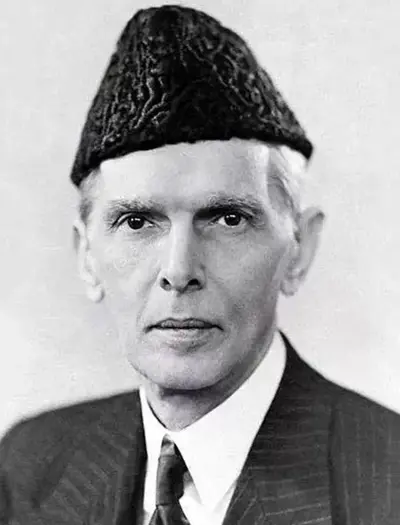
Muhammad Ali Jinnah was a barrister, politician and the founder of Pakistan. Jinnah served as the leader of the All-India Muslim League from 1913 until the inception of Pakistan on 14 August 1947, and then as the Dominion of Pakistan's first Governor-General until his death. He is revered in Pakistan as the Quaid-i-Azam ("Great Leader") and Baba-i-Qaum ("Father of the Nation"). His birthday is observed as a national holiday in Pakistan.
