Wilhelm II, German Emperor Quotes
Everywhere the "principe de la Monarchie" is called upon to show itself strong. That is why I am so glad at the capital speech you made other day to the deputations in response to some addresses for reform. It was very much to the point and made a deep impression everywhere
The two were cousins. Wilhelm was a very dominant personality and his cousin quite weak. This quotation shows the tyrannical view of the German Kaiser. The letters were secret but after the execution of the Czar, the Russians released the letters to show the dominant and warlike history of Germany under the Kaiser who was furious that the Russians had made such personal and secret letters public. The speech to which the Kaiser referred was one in which the Czar rejected all efforts to reform and limit his power—only driving more Russians to the revolutionary side. See the Czar’s quotation: {614054}
Wilhelm II, 1859-1941, Emperor of Germany & King of Prussia, Letter to Czar Nicholas of Russia, January 5, 1895
Sourced by: Eigen's Political and Historical Quotations

Your ideas of democracy are The Zemstvos had come to plead for reforms from the young Czar who most Russians hoped would be more modern than his all-powerful and dictatorial father. In a sense, it was this quotation that drove many moderate Russians to the radical side, and the quotation was used as a recruiting toll by both the Communist and non-Communist anti-Czarist Russians.


The fact that public opinion was initially against the reform measures, he regarded as an opportunity to change their minds. That took time and In 1832, the reform bill was passed.


He and Thomas Jefferson were the two most vocal propononents of this view amongst the Founding Fathers.


See {585430} for a classic example of this principle.


The only soldier ever so honored. At the beginning of WWII, President Roosevelt and Churchill wanted the U. S. Army to invade German and Italian North Africa. Marshall, General Eisenhower, and all the other military men, advised that while it was possible, it would be a diversion from the strategic objective of invading Europe. None the less FDR ordered the invasion. The effect on the American people was wonderful, It showed that the Germans were not invincible, increased enlistment and morale at home, and developed more popular support for the war. Later, Marshall learned much about Democratic leadership and he, himself became a very effective government leader, and began to appreciate FDR’s approach but with a little cynicism about democracy.

Many of the Ukrainian politicians were very corrupt. When she was the Prime Minister the political culture of corruption was so strong that she was not able to break it. When Tymoshenko had been out of office and imprisoned by the new very corrupt opposition, the Ukrainians rose up and after weeks of street protests, the government collapsed and a new government was formed and Tymoshenko was freed from jail. She made this statement shortly after her release.


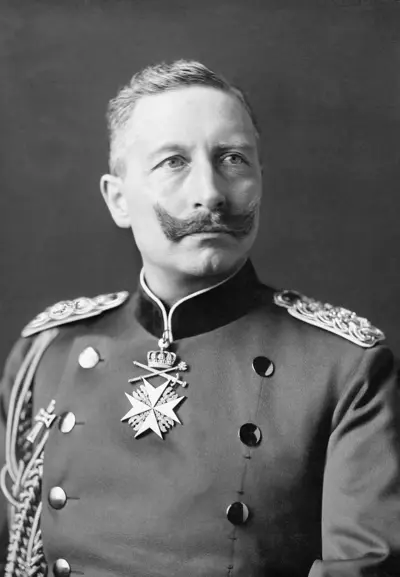
- Born: January 27, 1859
- Died: June 4, 1941
- Nationality: German
- Profession: Statesman
Wilhelm II, anglicised as William II, was the last German Emperor (Kaiser) and King of Prussia, reigning from 15 June 1888 until his abdication on 9 November 1918. Despite strengthening Germany's position as a great power by building a blue-water navy and promoting scientific innovation, his tactless public statements greatly antagonized the international community and his foreign policy was seen by many as one of the causes for the outbreak of World War I. When the German war effort collapsed after a series of crushing defeats on the Western Front in 1918, he was forced to abdicate, thereby bringing an end to the three-hundred-year rule of the House of Hohenzollern.
