William Wilberforce Quotes
I continue faithful to the measure of Parliamentary reform brought forward by Mr. Pitt. I am firmly persuaded that at present a prodigious majority of the people of this country are adverse to the measure. In my view, so far from being an objection to the discussion, this is rather a recommendation.
The fact that public opinion was initially against the reform measures, he regarded as an opportunity to change their minds. That took time and In 1832, the reform bill was passed.
William Wilberforce, 1759-1833, English Member of Parliament, Letter to a friend, 1817
Sourced by: Eigen's Political and Historical Quotations


The two were cousins. Wilhelm was a very dominant personality and his cousin quite weak. This quotation shows the tyrannical view of the German Kaiser. The letters were secret but after the execution of the Czar, the Russians released the letters to show the dominant and warlike history of Germany under the Kaiser who was furious that the Russians had made such personal and secret letters public. The speech to which the Kaiser referred was one in which the Czar rejected all efforts to reform and limit his power—only driving more Russians to the revolutionary side. See the Czar’s quotation: {614054}


This is the reason that it is so hard to reform Congress.


For a conservative this is an amazing position to take because the House of Lords was and is the most conservative institution in Great Britain. However, what makes Salisbury such an effective conservative political thinker is that the mere advantage of having a House of Lords to further the conservative agenda and protect its positions does not offset the principle of having a hereditary group of people—many without merit--with no checks on them by the rest of the body politic. Conservatism ought not support aristocracy but those who have achieved by merit.

On the possibility of term limitations on members of Congress:


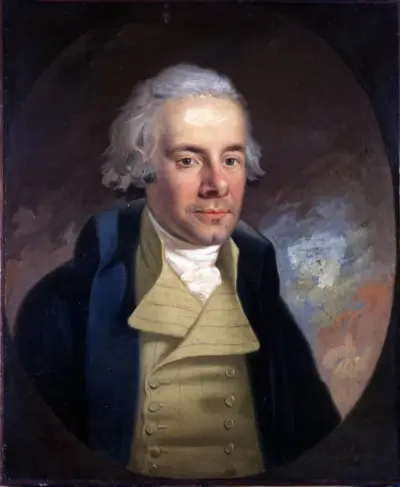
William Wilberforce was a British politician, philanthropist, and a leader of the movement to abolish the slave trade. A native of Kingston upon Hull, Yorkshire, he began his political career in 1780, eventually becoming an independent Member of Parliament (MP) for Yorkshire (1784–1812). In 1785, he became an evangelical Christian, which resulted in major changes to his lifestyle and a lifelong concern for reform.
