Ferdinand Lassalle Quotes
Then this will only prove again and again, that Monarchy in Germany is he longer capable of a national act.
Lassalle, Ferdinand. Letter to Karl Marx, 1859. Quoted in Ferdinand Lassalle as a Social Reformer, by Eduard Bernstein, translated by Eleanor Marx Aveling, Swan Sonnenschein & Co., 1893, p. 89.

The two were cousins. Wilhelm was a very dominant personality and his cousin quite weak. This quotation shows the tyrannical view of the German Kaiser. The letters were secret but after the execution of the Czar, the Russians released the letters to show the dominant and warlike history of Germany under the Kaiser who was furious that the Russians had made such personal and secret letters public. The speech to which the Kaiser referred was one in which the Czar rejected all efforts to reform and limit his power—only driving more Russians to the revolutionary side. See the Czar’s quotation: {614054}

The revolutionary acts from some of the more radical colonists but the colonial power structure was trying to negotiate for changes from the taxation and rights-impinging laws that Parliament had passed. Within a year the Continental Congress would take a more revolutionary position when this petition yielded no betterment-- {636864} and {636958}.


Adams was one of those who felt that the President and Vice President should have some Title of official respect like “Your Highness.” That was a very controversial issue at the time. See {586769}. However, most public opinion thought that was a throwback to monarchy. Adams was thereafter derided for being a monarchist.


Elected at 24 as the youngest British Prime Minister. He was arguing for a motion of censure of the government of Lord North


Cromwell was not opposed to monarchy per se as long as it was reasonably checked. He saw Charles II as a terrible monarch. After deposing Charles, he and his associates had to come up with some form of government. As “Lord Protector” he was a de facto monarch without the trappings.


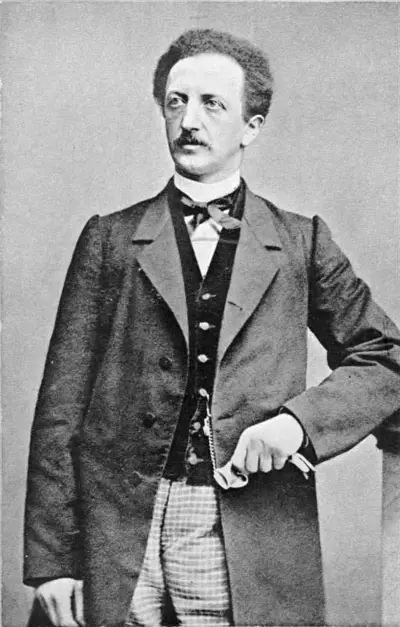
Ferdinand Lassalle was a Prussian-German jurist, philosopher, socialist and political activist best remembered as the initiator of the social democratic movement in Germany. "Lassalle was the first man in Germany, the first in Europe, who succeeded in organising a party of socialist action", or, as Rosa Luxemburg put it: "Lassalle managed to wrestle from history in two years of flaming agitation what needed many decades to come about." As agitator he coined the terms night-watchman state and iron law of wages.
