John Bingham Quotes
Every human being born within the United States of parents not owing allegiance to any foreign sovereignty is in the language of your Constitution itself, a natural born citizen.
Bingham, John A. Speech to the U.S. House of Representatives. The Congressional Globe, 39th Congress, 1st Session, F. & J. Rives, 9 Mar. 1866, p. 1291.


Various elements of the 14th amendment were being debated. Language referred to “citizens” but many of the abolitionists and reconstructionists were concerned that the slavery forces in the Southern states would not provide protections to the Negro and the grounds that the were not citizens. As long as the states could define who was and was not a citizen, any of the equal protection clauses of the proposed 14TH Amendment could be evaded. Senator Howard then proposed this language which was accepted and became part of the Amendment. In modern times this particular clause was more relevant to the debate about immigration than to civil rights but originally the clause was included to make sure that Blacks would be citizens.

In a House debate in 1923 on the Nordic or Latin discovery of America, Congressman Summers of Washington asked Italian-American Congressman La Guardia to yield to ask whether or not Christopher Columbus had come from "your country."

The 14th Amendment made the Black slaves and their families all citizens as most people know, but it had two other important aspects. It prohibited the individual states from deciding who who was and was not a citizen of the country and the state. In addition, it guaranteed that anyone born in the United States was a citizen regardless of the status of his parents—citizens or not, illegal immigrants or legal.


Defending his opposition to a League of Nations. He was instrumental in preventing the United States from joining the League of Nations which President Wilson had worked so hard to create. The Senate never ratified the treaty which Wilson had signed.


President Benjamin Harrison and Congress proclaimed that October 31, 1892 be a national celebration of the 400th Anniversary of Columbus landing in America. Bellamy represented a juvenile weekly publication and was named chairman of the committee to conduct the celebration. A first draft of the pledge was written by James B. Upham, a staff member of the publication. The words "under God" were added in 1952 by an Act of Congress. The original had “to my flag.” The pledge was first used publicly at the Chicago World’s Fair on October 21, 1892. It was not endorsed by Congress until 1942. It is officially recognized as law in 36 United State Code 172.


In the internecine warfare in the Iraq War many of the Iraqis who worked with and for the United States during the war, were threatened and many killed. Unlike the Ford Administration in the Vietnam War, which had resettled almost 200,000 Asians who had worked with America and were in danger of retaliation, the George W. Bush Administration would not allow the people who were loyal to United States forces in the war to immigrate to the U. S.


This law was the excuse that was used by the racists of the 1920s to deny Japanese the right of American Citizenship and to inter them on the West Coast in WWII. The concept of Dual Citizenship which was so common in America after WWII was then anathema on the grounds that Americans cannot have dual loyalties. The anti-Japanese American forces claimed that since Japanese are always Japanese citizens even if born in America. Therefore, they are not to be trusted.
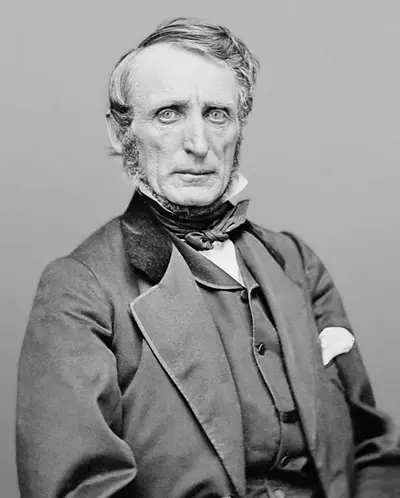
John Armor Bingham was an American Republican Representative from Ohio, an assistant Judge Advocate General in the trial of the Abraham Lincoln assassination, and a prosecutor in the impeachment trials of U.S. President Andrew Johnson. He was also the principal framer of the Fourteenth Amendment to the United States Constitution.
