Paul D. Eaton Quotes
Anyone Who throws their lot in with the United States has to be taken care of. Loyalty works both ways… It’s a matter of morality.
In the internecine warfare in the Iraq War many of the Iraqis who worked with and for the United States during the war, were threatened and many killed. Unlike the Ford Administration in the Vietnam War, which had resettled almost 200,000 Asians who had worked with America and were in danger of retaliation, the George W. Bush Administration would not allow the people who were loyal to United States forces in the war to immigrate to the U. S.
Paul D. Eaton, Army General, Referring to the Iraqi people who worked with and for the U. S. forces, CBS 60 Minutes, August 26, 2007, .
Sourced by: Eigen's Political and Historical Quotations


There was a legal requirement that all cadidates for the parliament had to sign before the election an oath swearing to take their seat if elected to close off the possibility that some would cripple the parliament by winning but not taking their seats. De Valera wanted to run, and fully intended to take his seat, but had promised to sign no oaths about the parliament elections. On the last day possible, he went to the election clerk who gave him a piece of paper with the oath printed on the top and below it, the lines for candidate signatures. De Valera took a blank piece of paper and covered the oath but leaving the signature line exposed. He then signed the line and made sure that the clerk would remember that he has not signed an oath, but had signed a blank piece of paper where the oath could not be seen. To him this was a very important distinction but if failed to convince most other Irishmen.


She asked the same question that American officials in Afghanistan, Iraq, Egypt, Vietnam, and Korea have asked a for the next 100 years and longer. The officials of a true democracy can never be sure that the promises and commitments that they make in the name of their government will be honored in the future. The body politic can and often does have a substantial change of heart or mind.


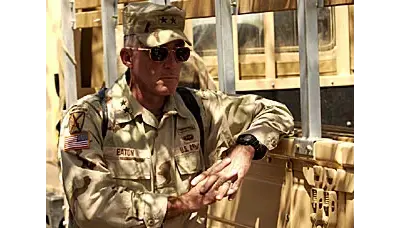
Paul D. Eaton (born 1950) is a former United States Army officer most known for his command of operations to train Iraqi troops during Operation Iraqi Freedom. Eaton served in that capacity between 2003 and 2004, and then returned to the US to become Deputy Chief of Staff for Operations and Training, United States Army Training and Doctrine Command, Fort Monroe, Virginia. He previously served as Senior Adviser to the now-defunct National Security Network, a progressive Washington, D.C.-based think tank that focused on foreign policy and defense issues.
