Ruby Bridges Quotes
Every day, I would show up, and there were no kids, just me and my teacher in my classroom. Every day, I would be escorted by marshals past a mob of people protesting and boycotting the school. This went on for a whole year.
Bridges, Ruby. Through My Eyes. Scholastic Press, 1999, p. 25.


Defending his action of using national guard troops to prevent school integration:

Jessie Helms was his young assistant who drafted this race baiting ad. There are two vicious but subtle aspects to this kind of attach ads. First, not that the ad does not address the problem of white men working along side of blacks. It only refers to wives and daughter. This interracial sex innuendo played on and increased the fear of whites that Blacks would commonly rape white women. The second nasty aspect of the ad is the specific attack on the opponent. Instead of saying that he favored desegregation, the phrase “mingling of the races” was used which implied that Graham was in favor of biracial intermarriage and children—again another sex innuendo. When integration of the workforce finally occurred in the South, there was no increase in Black men sexually assaulting white women. There has been a substantial increase in racial intermarriage however as racial bigotry has diminished in America.


Mississippi has always had one of the poorer education systems of the nation. But in the early 20th Century, it was far, far behind other states. It was terrible for whites and abysmal and almost non-existent for Blacks. The Federal Government began some limited aid to education and many segregationists of the South feared that if the money were spent to improve Negro education as well as white education, the Southern, segregationist way of life was threatened. Vardaman was absolutely right to worry for what he and the other racists of the South feared most actually came to pass. See {584325} for another segregationists fear of educating African Americans.
Historically, the Southern reaction to early 20th centry Civil Rights efforts was that it was the work of communist and anarchist radicals who were trying to destabilize America. When that argument began to be exposed as false, the next line of defense was that the southern Negro was perfectly happy in the segregated South, and the only problem was Northern liberals, black and white, who came to the South to foment trouble.
Warren a Republican from California who knew Palmer for years, stood up, put his arm around Palmer and told him, “Kyle, you and I will always be friends” and walked out.

This painting depicted a young black girl walking to school surrounded by 4 U. S. Marshalls protecting her from the crowd of white racists trying to prevent her from attending an elementary school under court order. The vicious race hatred that school integration revealed was the national problem that was then surfacing. The graphic is the illustration that appeared in Look with that name.

The all white regular Mississippi Delegation was selected in elections where Blacks were barred from voting although Blacks were in the majority in Mississippi. In addition, the regular party was advocating obstructing the Supreme Court school integration decisions and the Civil Rights Act that had just been passed. See {637616}. The insurgent group was selected in integrated elections, contained black and white delegates, and was pledged to support and obey the laws. The President could not make the decision unilaterally, but had a great deal of influence.


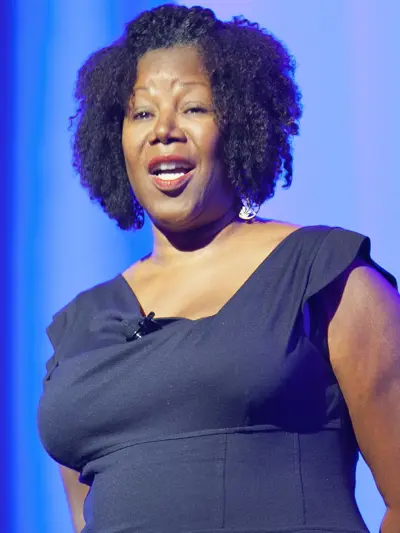
Ruby Nell Bridges Hall is an American civil rights activist. She was the first African-American child to desegregate the all-white William Frantz Elementary School in Louisiana during the New Orleans school desegregation crisis on November 14, 1960. She is the subject of a 1964 painting, The Problem We All Live With by Norman Rockwell.
