Orval E. Faubus Quotes
Blood will run in the streets if Negro pupils should attempt to enter Central High School.
Defending his action of using national guard troops to prevent school integration:
Orval E. Faubus, Arkansas Governor (Democrat), Statement, September, 1957
Sourced by: Eigen's Political and Historical Quotations


Armstrong rarely commented on politics (see {615854}), but the Governor defying the Supreme Court and not letting his people even go to school with other students was too much for him. He not only made the statement, but he approved it for publication. This shocked many who knew him as an apolitical person. He was particularly distressed with President Eisenhower who although he had warned Faubus that he would enforce the court order and then used federal troops to do so, Eisenhower was a man of action and not rhetoric and his lack of firm public statements overlooked an opportunity to use the Presidential “bully pulpit” and exercise his moral leadership and authority. Many then, and even 50 years later, were not sure where he stood on the issue of school desegregation. See {615852}.

Jessie Helms was his young assistant who drafted this race baiting ad. There are two vicious but subtle aspects to this kind of attach ads. First, not that the ad does not address the problem of white men working along side of blacks. It only refers to wives and daughter. This interracial sex innuendo played on and increased the fear of whites that Blacks would commonly rape white women. The second nasty aspect of the ad is the specific attack on the opponent. Instead of saying that he favored desegregation, the phrase “mingling of the races” was used which implied that Graham was in favor of biracial intermarriage and children—again another sex innuendo. When integration of the workforce finally occurred in the South, there was no increase in Black men sexually assaulting white women. There has been a substantial increase in racial intermarriage however as racial bigotry has diminished in America.

This painting depicted a young black girl walking to school surrounded by 4 U. S. Marshalls protecting her from the crowd of white racists trying to prevent her from attending an elementary school under court order. The vicious race hatred that school integration revealed was the national problem that was then surfacing. The graphic is the illustration that appeared in Look with that name.


The statement was made even more dramatic as the outgoing Governor, Lester Mattox, standing behind Carter at the ceremony, was an arch segregationist.


Freedom Rides were interracial groups of Civil Rights advocates who boarded public interstate busses in Washington and rode South through some of the most segregated communities in the country. As the bus stopped at the segregated rest stops, the Black Freedom Riders would use the “white” waiting rooms, toilets, and other facilities which was against the local custom and law. Racist segregationists often brutalized and assaulted the Freedom riders whose leaders demanded Federal Protection. The Attorney General and others were trying to get the local politicians and law enforcement officials to protect the Freedom Riders, but often these were the worst of the racist segregationists. Kennedy thought if he could have a “cooling off period” for a few days, he could persuade the locals to protect the Freedom Riders from the mobs with the threat of sending Federal Marshalls or troops for the protection. So he asked Farmer and other Freedom Ride organizers to stop the Freedom Rides for a few days. This was Farmer’s famous response. The Freedom Rides continued and forced the Federal Government to respond on a timetable they did not prefer.

Wilson, a history and government professor and college president before politics, was has been accused of being one of the most racist Presidents since Reconstruction. Prior to his Presidency, the Federal Government had been making steady progress in hiring African Americans. Under Wilson there was a wholesale firing of a large proportion of them. Some apologists argue that his League of Nations and other major aspirations required the votes and cooperation of Southern Senators who insisted that many of the blacks be terminated. At the same time, the KKK was near the zenith of its membership and political power and was an intimidating force. Wilson’s home state of New Jersey not only had a large KKK membership but there were lynching of Blacks in his own state and when Governor and President he never asked for any anti-lynching legislation.


At the time, racial discrimination was so rampant in America that when one of the units of Pepsi Cola, under the leadership of Walter Mack, hired Emmons to sell to Black communities, the Black residents of Northern communities were so unused to seeing Blacks in a “white collar” job, that they were treated as celebrities. Emmons and a few other black salesmen had incredible results yet despite that, the practice did not grow at the time as there were too many white executives who were so prejudiced that the practice was not increased after Mack retired. This short quotation paints a good picture of the nature of racial job discrimination in the North prior to WWII.
Historically, the Southern reaction to early 20th centry Civil Rights efforts was that it was the work of communist and anarchist radicals who were trying to destabilize America. When that argument began to be exposed as false, the next line of defense was that the southern Negro was perfectly happy in the segregated South, and the only problem was Northern liberals, black and white, who came to the South to foment trouble.
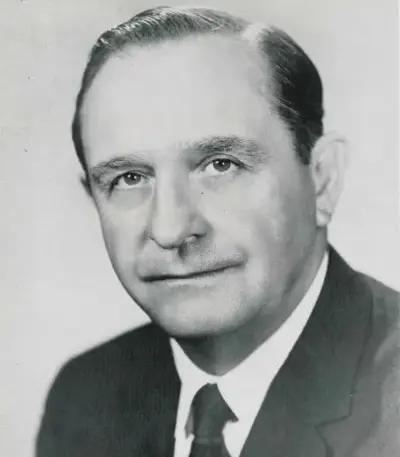
Orval Eugene Faubus was an American politician who served as the 36th Governor of Arkansas from 1955 to 1967, as a member of the Democratic Party. In 1957, he refused to comply with a unanimous decision of the United States Supreme Court in the 1954 case Brown v. Board of Education, and ordered the Arkansas National Guard to prevent black students from attending Little Rock Central High School. This event became known as the Little Rock Crisis.
