Ralph Webster Yarborough Quotes
I abhor the brutality that smears the good name of one of the fairest sections of our land. Shame on you, George Wallace.
Ralph Webster Yarborough, 1903–1996, U. S. Senator (Democrat, TX), Reacting to Wallace encouraging the whites of Alabama to attack the Civil Rights Demonstrators and encouraging the law enforcement officers to allow it and assist them, March 1965
Sourced by: Eigen's Political and Historical Quotations

Armstrong rarely commented on politics (see {615854}), but the Governor defying the Supreme Court and not letting his people even go to school with other students was too much for him. He not only made the statement, but he approved it for publication. This shocked many who knew him as an apolitical person. He was particularly distressed with President Eisenhower who although he had warned Faubus that he would enforce the court order and then used federal troops to do so, Eisenhower was a man of action and not rhetoric and his lack of firm public statements overlooked an opportunity to use the Presidential “bully pulpit” and exercise his moral leadership and authority. Many then, and even 50 years later, were not sure where he stood on the issue of school desegregation. See {615852}.

Justice Marshall, in he early career played an extremely important role in the development of the law vis a vis race and discrimination in America. He went from town to town in the Jim Crow, segregated South filing and often winning civil rights lawsuits. This was an era where lynching was still prevalent, and he was often threatened with bodily harm or death. Justice Ginsberg who also had been a leader in filing and winning civil rights suits but she worked in the area of women’s rights. The host had stated that she and Marshall were the great legal pioneers in civil rights litigation. Ginsberg explained that she hers was a much easier role and Marshall should receive much more credit. This was her reason.


Freedom Rides were interracial groups of Civil Rights advocates who boarded public interstate busses in Washington and rode South through some of the most segregated communities in the country. As the bus stopped at the segregated rest stops, the Black Freedom Riders would use the “white” waiting rooms, toilets, and other facilities which was against the local custom and law. Racist segregationists often brutalized and assaulted the Freedom riders whose leaders demanded Federal Protection. The Attorney General and others were trying to get the local politicians and law enforcement officials to protect the Freedom Riders, but often these were the worst of the racist segregationists. Kennedy thought if he could have a “cooling off period” for a few days, he could persuade the locals to protect the Freedom Riders from the mobs with the threat of sending Federal Marshalls or troops for the protection. So he asked Farmer and other Freedom Ride organizers to stop the Freedom Rides for a few days. This was Farmer’s famous response. The Freedom Rides continued and forced the Federal Government to respond on a timetable they did not prefer.


This was art of the Nixon "Southern Strategy" to alienate the white supremacists and racists from the Democratic Party with Civil Rights legislation and rhetoric, and get most of them to become Republicans. But as Phillips observed, when Negroes began voting in significant numbers in the South the party switching really accelerated.


The Georgia flag with the Confederate flag inset was adopted by the legislature in 1956 during the civil rights struggle. The Governor called for legislation bringing back the old flag.

Defending his action of using national guard troops to prevent school integration:

Forrest went on to be the first National Leader of the Terrorist Organzation.

Reconstruction was the period in the South after the Civil War. The change that emancipation brought to the white South was traumatic, and there was a constant struggle between those who wanted the Blacks to be integrated into Southern Society—and those Southerners who wanted to create a society that would be as close to slavery as possible, So the Klu Klux Klan and other terrorist organizations formed and with lynching and other intimidation, much of the initial progress of Reconstruction was rolled back and did not get reinstated until the Civil Rights and Voting Rights Acts were passed in 1964.

Senator Glen Taylor was arrested on May 1, 1948, in Birmingham, Alabama by police commissioner Eugene "Bull" Connor, for attempting to use a door reserved for African Americans, rather than the whites-only door, while attempting to attend a meeting of the Southern Negro Youth Congress. He was subsequently convicted of disorderly conduct. It is hard to believe that such a thing happened in America but it did. ER was one of the few Democrats to condemn such behavior. She took a great deal of criticism from the Southern Democrats for this column. They claimed she called White Southerners “Stupid.”
Plessy v. Ferguson was one of the worst Supreme Court Decisions in American history. It held that states could provide and/or mandate racially segregated facilities and institutions so long as they were equal.
The law enforcement officers were the ones who broke the law when they beat and brutalized the peaceful civil rights marchers. The “white niggers” refer to the white marchers including clergy.
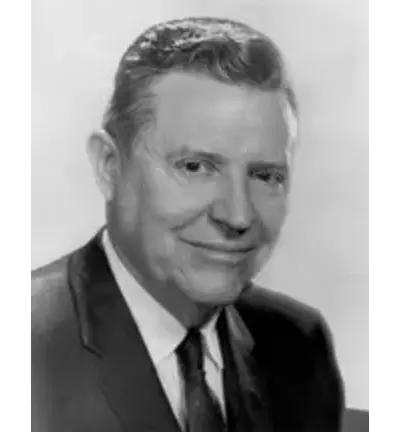
Ralph Webster Yarborough was an American politician and lawyer. He was a Texas Democratic politician who served in the United States Senate from 1957 to 1971 and was a leader of the progressive wing of his party. Along with Senate Majority Leader Lyndon B. Johnson and Speaker of the House Sam Rayburn, but unlike most Southern congressmen, Yarborough refused to support the 1956 Southern Manifesto, which called for resistance to the racial integration of schools and other public places. Yarborough voted in favor of the Civil Rights Acts of 1957, 1960, 1964, and 1968, as well as the 24th Amendment to the U.S. Constitution, the Voting Rights Act of 1965, and the confirmation of Thurgood Marshall to the U.S. Supreme Court. Along with Stuart Symington of Missouri and Mike Monroney of Oklahoma, Yarborough was one of only three Southern senators to vote for all five bills.
