Alexander Hamilton Quotes
... erred in relying so much on the rectitude and utility of their measures as to have neglected the cultivation of popular favor by fair and justifiable expedients.
When Aaron Burr—with the aid of Tammany Hall—won political control of New York City from Alexander Hamilton and the moneyed aristocracy, Hamilton was greatly impressed by the new methods: carriages for the sick and infirm and elderly on election day, for example. He concluded that his own party, the Federalists:
Alexander Hamilton, 1755-1804, Aide-de-camp to General Washington, Member of the Continental Congress and the Constitutional Convention, U. S. Secretary of the Treasury (Federalist, NY), 1800
Sourced by: Eigen's Political and Historical Quotations


Ailes was the inventor of the "Video News Release", a deceptive practice which was so successful that politicians of all political stripes started using it. Then government agencies started promoting their programs using it. But soon private corporations adopted Ailes technique and made the Video News Release a mainstream advertising and public relations technique and by 1990, it had lost all ethical taints and was used throughout the world with very little of the old moral and ethical compunctions or stigma.

Of her husband, Jefferson Davis, President of the Confederate States of America:


This is one of the most profound quotations about American Politics.


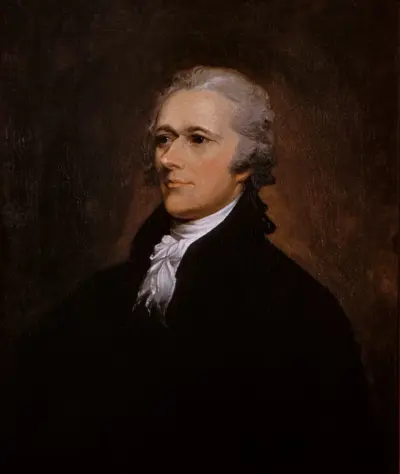
Alexander Hamilton was an American statesman, politician, legal scholar, military commander, lawyer, banker, and economist. He was one of the Founding Fathers of the United States. He was an influential interpreter and promoter of the U.S. Constitution, as well as the founder of the nation's financial system, the Federalist Party, the United States Coast Guard, and the New York Post newspaper. As the first secretary of the treasury, Hamilton was the main author of the economic policies of George Washington's administration. He took the lead in the federal government's funding of the states' debts, as well as establishing the nation's first two de facto central banks, the Bank of North America and the First Bank of the United States, a system of tariffs, and friendly trade relations with Britain. His vision included a strong central government led by a vigorous executive branch, a strong commercial economy, government-controlled banks, support for manufacturing, and a strong military.
