Alphonso Jackson Quotes
Each year, $55 Billion occur in closing costs, and people can’t shop around for them.
“Closing costs” are those costs associated with the transfer of the title to land and a home, the payment of taxes and the mortgage financing of home sales. In most states many of these closing costs are artificially high because of the lack of a competitive market consumer protection, conflicts of interest, and the nature of the home sales transaction.
Alphonso Jackson, Secretary of Housing and Urban Development (Republican), Speech, Republican National Lawyer’s Association, April 22, 2005
Sourced by: Eigen's Political and Historical Quotations


Hoover, a brilliant administrator, seems to have been on the wrong side of most economic issues.

Shortly thereafter, India started to reduce the protectionism.

Railroads and other large markets shared dominated by a few large corporations.


Incredibly enough, until this Supreme Court Decision, bigots would sell a home on the open market and write into the deed that the house may never be sold to a Black, a Jew, a Mormon, or any other person one of the owners did not like. This was actually enforced by American courts trying to preserve segregation in housing until 1948 and the 1956 decision stopped the practice but housing segregation persisted by other means.

Here, an officer of a large corporation (Pittsburgh Plate Glass) makes the classic argument of large corporations about the anti-trust laws which prevent them from using their economic power to crush competition. The claim that the large corporations are at a disadvantage and handicapped in competing with small companies is easily refuted by the bankruptcy rate of small businesses which is large, and that of large corporations which is very small, and that of major monopolies which is virtually zero.

The Republicans had won with Abraham Lincoln in 1860.


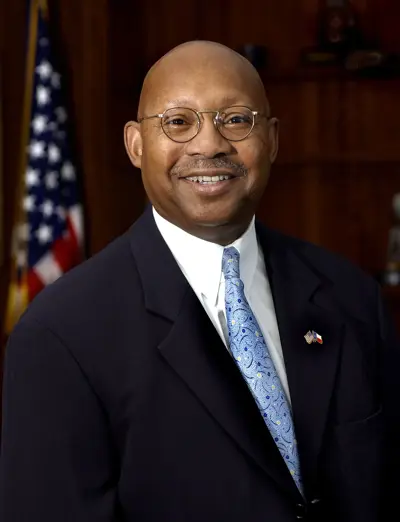
Alphonso R. Jackson served as the 13th United States Secretary of Housing and Urban Development (HUD). He was nominated by President George W. Bush on January 28, 2004 and confirmed by the Senate on March 31, 2004. Jackson announced his resignation on March 31, 2008.
